

You’ve probably seen dozens of “2026 SEO predictions” posts already.
I’m not here to add another one.
Instead, I collected the most popular predictions from respected SEO experts and organized them into 4 shifts that will shape how we approach SEO (or GEO?) and content marketing this year.
Here’s what stood out.
Table of Contents
Brand Mentions Matter More Than Clicks
Rand Fishkin predicts users will consume 10X more content via AI summaries than through actual articles by end of 2026.
AI Overviews already grew from 26.6% to 44.4% of queries according to BrightEdge.
Your content is being consumed.
Just not on your site.
Kevin Indig puts it well in his State of AI Search: “Earn visibility in the interface where users search. Traditional SEO remains foundational, but AI visibility demands different content strategies“
Kelly-Anne Crean from Koozai agrees: “It’s no longer just about ranking pages, it’s about being the source AI trusts and uses.“
My take
You need to monitor where your competitors are mentioned and you’re not.
That’s your opportunity to join the conversation.
thruuu’s AIO Monitoring tool helps you spot exactly this: keywords where AI Overviews exist, your domain is cited as a source, but your brand isn’t mentioned.
That’s your low-hanging fruit.
How to find these opportunities
Start by creating your first AIO Report. Upload a list of keywords and your domain.
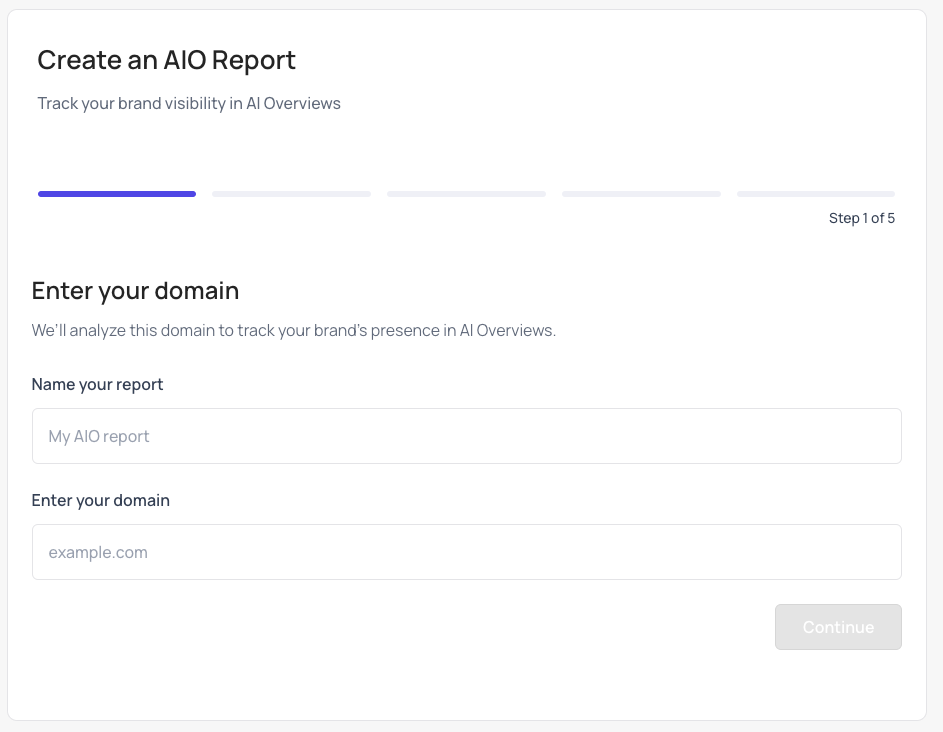
thruuu will calculate your visibility score and show how many of your keywords trigger AI Overviews.
From there, the filters do the heavy lifting.
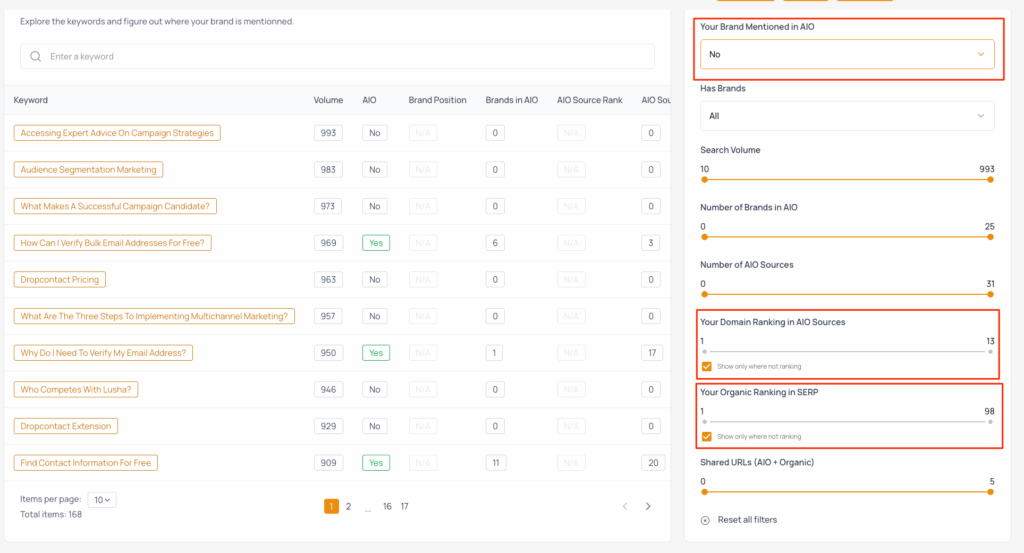
Instead of reviewing every keyword manually, you can:
- Find low-hanging fruit: Filter by Search Volume + Your Organic Ranking to surface keywords where you already rank but aren’t mentioned in the AI Overview.
- Uncover brand gaps: Use “Show only where not ranking” under Your Domain Ranking in AIO Sources. These are keywords where competitors show up and you don’t.
- Prioritize fast: Combine filters to isolate high-volume keywords with low brand presence. Focus there first.
The hidden gap: Your domain ranks, but your brand doesn’t appear
Here’s a scenario worth paying attention to: your domain is cited as a source in the AI Overview, but your brand name isn’t mentioned in the summary.
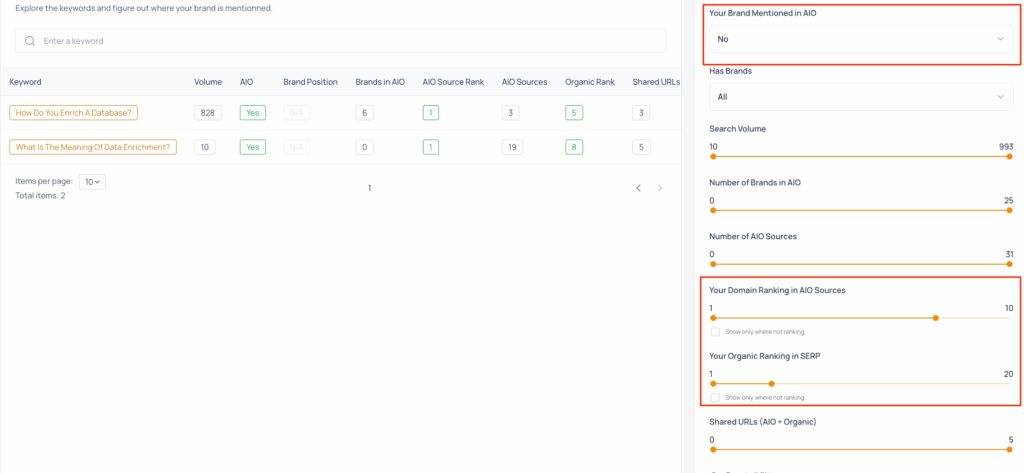
What’s happening? Google’s AI recognizes your content. It just doesn’t associate it with your brand. You’re contributing value without getting credit.
Why it matters: competitors are shaping the narrative. Even when your content is just as good… or better.
How to fix it
- Review the AI Overview text for those keywords
- Check if your brand appears early and clearly in your page content
- Reinforce brand references in your title, meta, H1, and intro paragraph
- Update your structured data to reflect your brand consistently
Topic Clusters Become Non-Negotiable
LLMs don’t match keywords. They use vector embeddings to understand semantic relationships.
Mackenzie Brook from Flaunt Digital predicts: “The key to winning in organic search will be mastering semantic SEO and intent clustering, building content ecosystems that mirror how AI-driven search engines interpret meaning.“
Garrett Sussman from iPullRank adds: “Map the query fan-out. Identify the related questions, variations, and formats triggered by your top topics.“
My take
This is exactly what topic-first content planning is about. I’ve been advocating this for years now.
- Start with your audience’s intent.
- Understand their main questions.
- Map it to their customer journey.
- Extract more questions per phase.
- Create the right content and build interconnected clusters.
thruuu’s keyword clustering tool helps you do this by grouping keywords based on SERP similarity, so you see what Google already considers related.
Read this article about SEO keyword mapping or watch the walkthrough.
“Share of SERP” Replaces “Position 1”
Embryo’s analysis suggests there will be no more talk of reaching the top of page 1.
The focus shifts to Share of SERP, appearing in AI Overviews, video carousels, People Also Ask, AND organic results.
My take
SERP analysis becomes even more important. You need to surface your brand across multiple touchpoints.
That might mean an article complemented by a YouTube video, plus a FAQ section targeting long-tail queries.
thruuu’s SERP analysis tool helps you dive deeper into the SERP.
For any keyword, thruuu pulls the full SERP and breaks it down: which domains appear, what content types rank, which SERP features are present, and how the top results are structured.
And with the SERP Feature filter in the keyword clustering tool, you can identify which keywords have strong feature presence, so you can prioritize the right formats for each content.
How it works
Each cluster includes visibility data for Google’s rich results. You’re not just seeing keywords grouped together. You’re seeing how those topics actually appear in search.
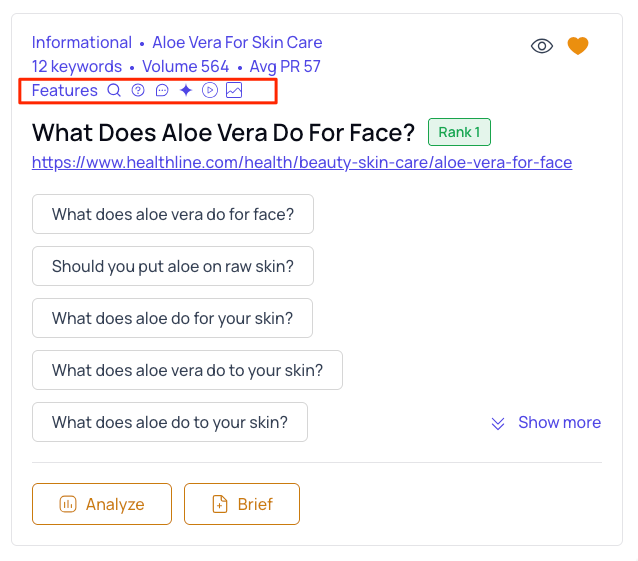
Want to find clusters dominated by AI Overviews? Filter for it.
Looking for topics where videos or forums own the SERP? Same thing.
You can quickly identify where to complement your article with a video, or where engaging in community discussions might be the better play.
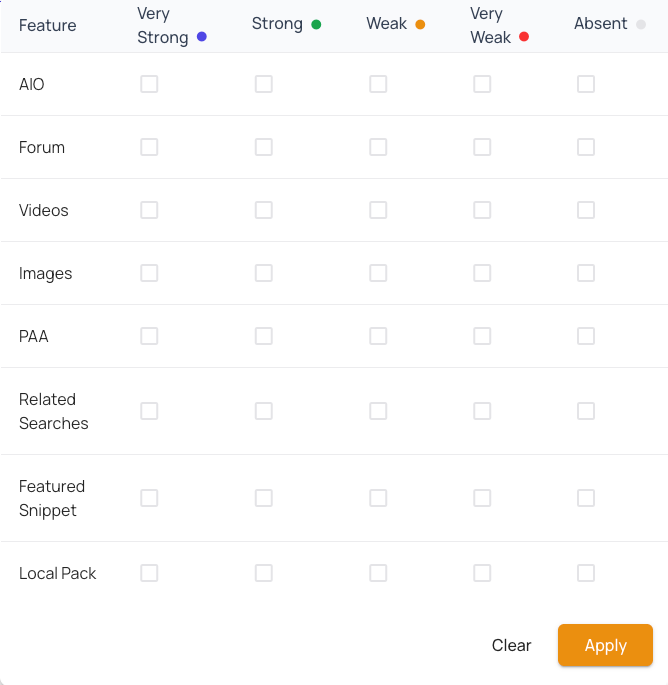
What you see inside each cluster
When you open the cluster analysis view, thruuu aggregates the most frequent SERP features across all keywords in that group:
- AI Overviews: View each keyword and its corresponding AIO result
- People Also Ask: Grouped questions that appear frequently across the cluster
- Featured Snippets: All snippets detected within the top results
- Videos: The top three video results for inspiration
- Forums and Discussions: See which conversations show up most often
- Images: Top image results to visualize the topic
- Related Searches: Grouped queries associated with the cluster
- Local Packs: Frequent local results appearing in the SERP
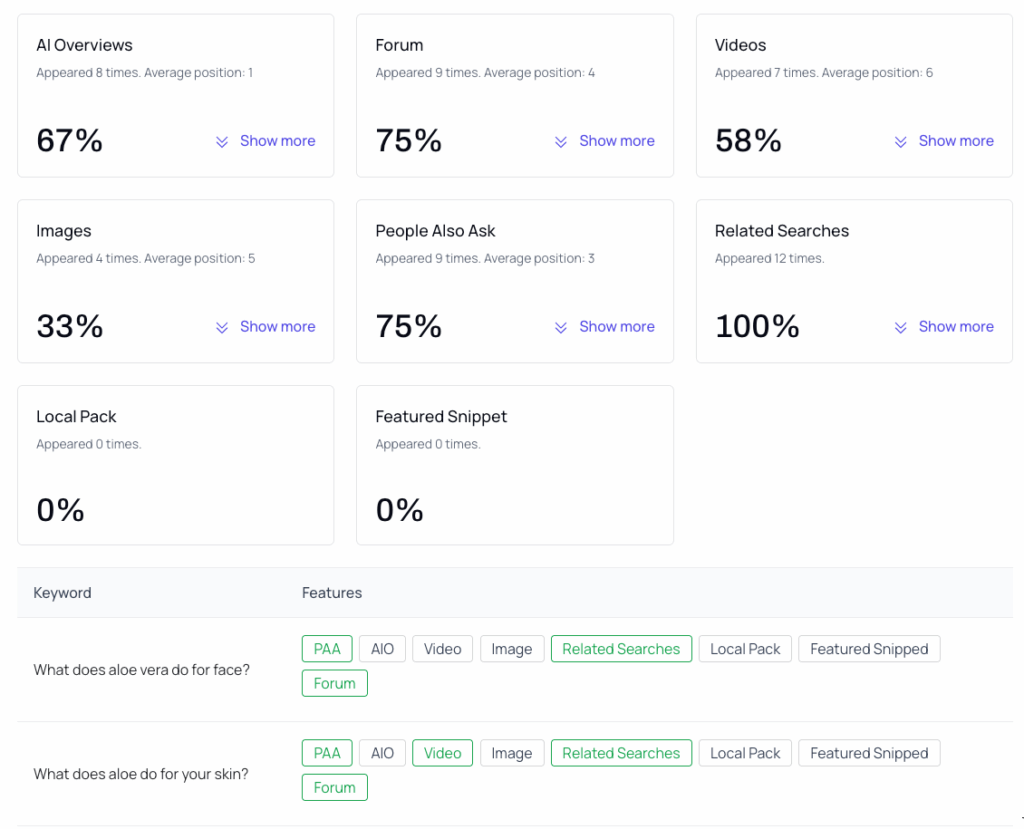
What to do with this data
- Spot opportunities to appear in rich results like AIO, PAA, and Featured Snippets
- Detect content gaps where competitors dominate forums, videos, or AI summaries
- Filter clusters by SERP feature type and focus on the highest-impact opportunities first
This gives you a clear view of how Google structures each SERP, so your content strategy matches how users actually experience search.
Human Expertise Beats AI Content
Here’s the reality: 30-40% of active web content is now AI-generated.
Omid Ghiam from Marketer Milk predicts Experience (the first ‘E’ in E-E-A-T) will be the strongest ranking factor: “We’ll see smaller bloggers with solid social proof outrank larger corporations that have lost their soul.“
The proof is already showing. Real people with genuine expertise are outranking massive brands simply by writing from lived experience.
My take
I’ve noticed this pattern already in 2025.
Look at the SERP for “Use AI for Blogging“.
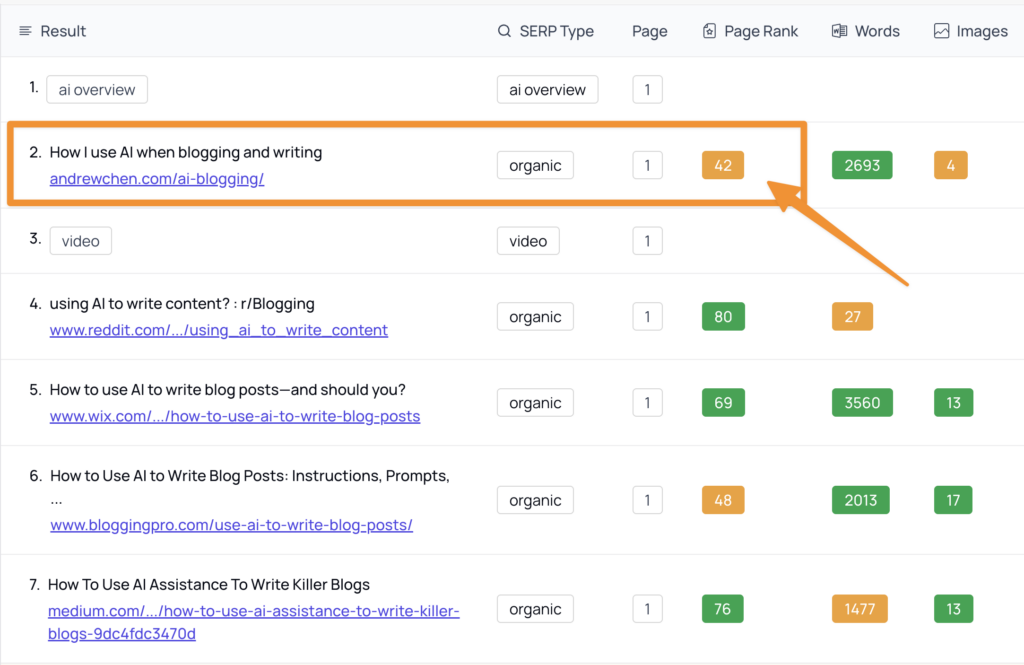
The first result has the lowest domain authority and beats Wix, Forbes, Hubspot and other large websites.
Read the article and compare versus the rest of the SERP.
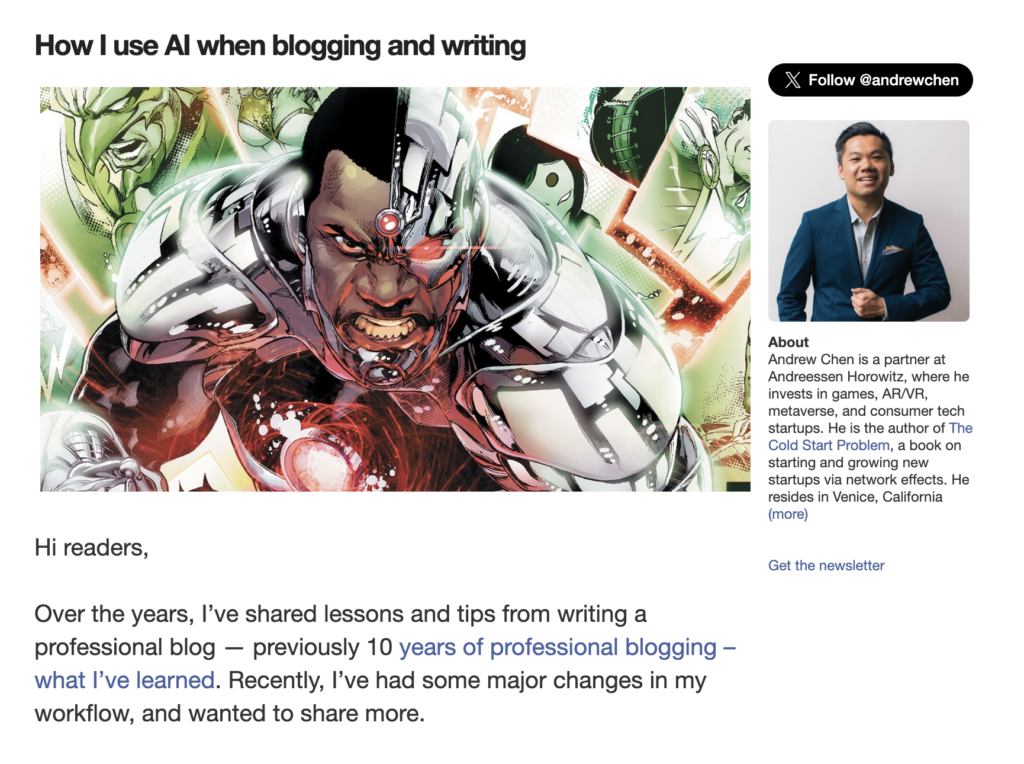
You’ll feel how human it is.
This connects to information gain. When everyone publishes the same AI-generated summaries, the content that adds something new from your own expertise stands out.
Quality wins.
And quality starts with a solid content brief.
I’ve talked with too many people last year who complained about low quality content.
But they weren’t creating briefs!!!
How can you guide your writer?
- Spend time finding the right angle.
- Provide clear direction to your writer.
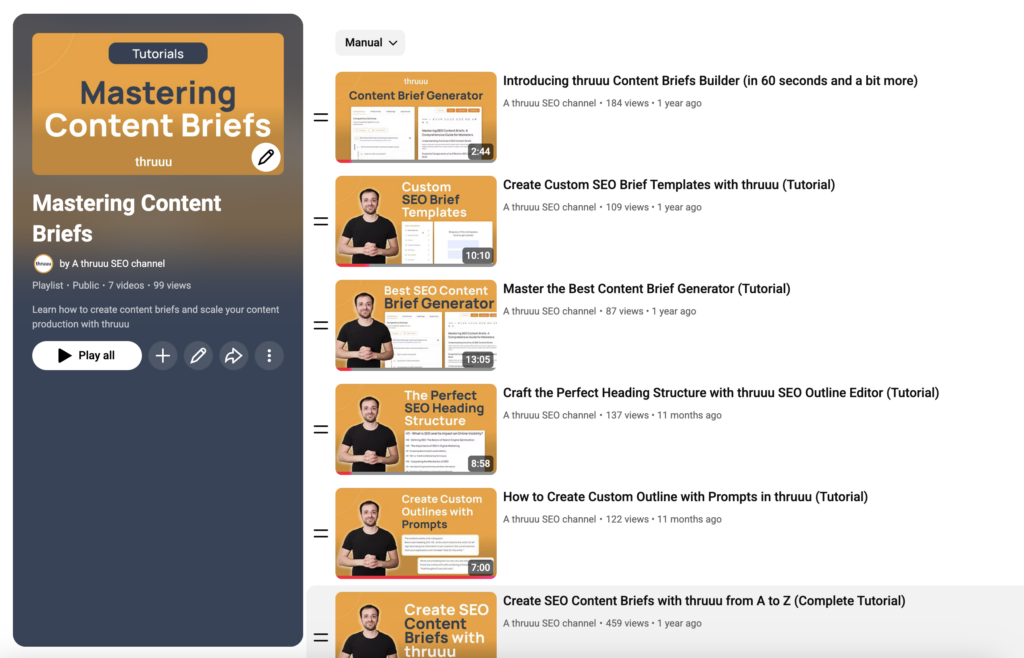
thruuu’s content brief tool pulls SERP data and helps you build structured briefs that guide better content.
Watch this tutorial and get learn how to create great seo content briefs.
Also: don’t overlook content refresh.
Instead of creating new generic posts, update your best content with fresh insights. LLMs favor fresh information.
The Common Thread
Every prediction points to the same thing: quality content that earns trust.
- Be mentioned.
- Be the source.
- Be trusted.
That’s what we’ll help you build in 2026.
Empower Your Content Team
Our end-to-end content optimization solution empowers your team to crack the Google algorithm, craft exceptional content, and achieve remarkable organic search results.