

Most SEO content strategies start in a spreadsheet and die in a spreadsheet.
You know the drill.
You export a thousand keywords from your favorite SEO tool, group them by intent or category, cross-reference with Google Search Console to see if you already rank for something, then prioritize by volume and domain authority.
Three hours later, you have a color-coded spreadsheet with 40 tabs, a dozen IF/THEN formulas, and a nagging feeling that you missed something important.
You missed a lot.
So I built an AI-powered SEO content strategy workflow that does it for you.
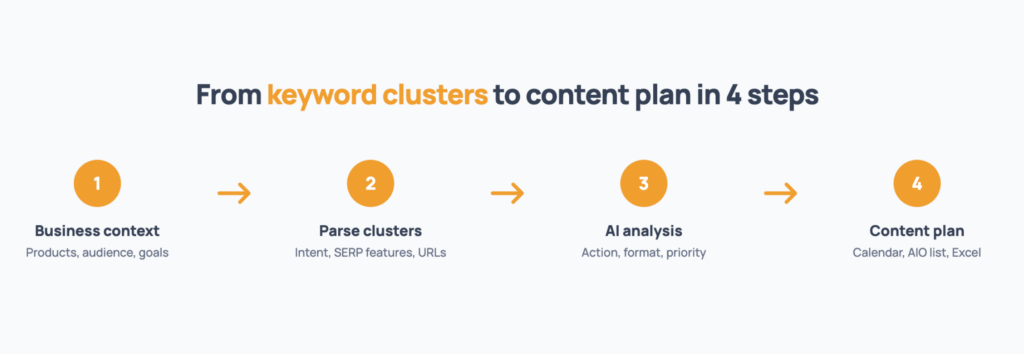
I connected Claude Code to thruuu’s keyword clustering export and created a workflow that reads every cluster, understands your business, and makes strategic decisions about what to create, optimize, and skip.
It tells you which article to write next, which existing page needs a refresh, whether you need a supporting YouTube video, and where to engage in forums.
The output is a prioritized SEO content plan with a week-by-week calendar, ready to execute.
In this article, I’ll walk you through the full setup: how it works, what it produces, and how to run it on your own domain.
Table of Contents
The AI content strategist workflow at a glance
The full workflow has four steps:
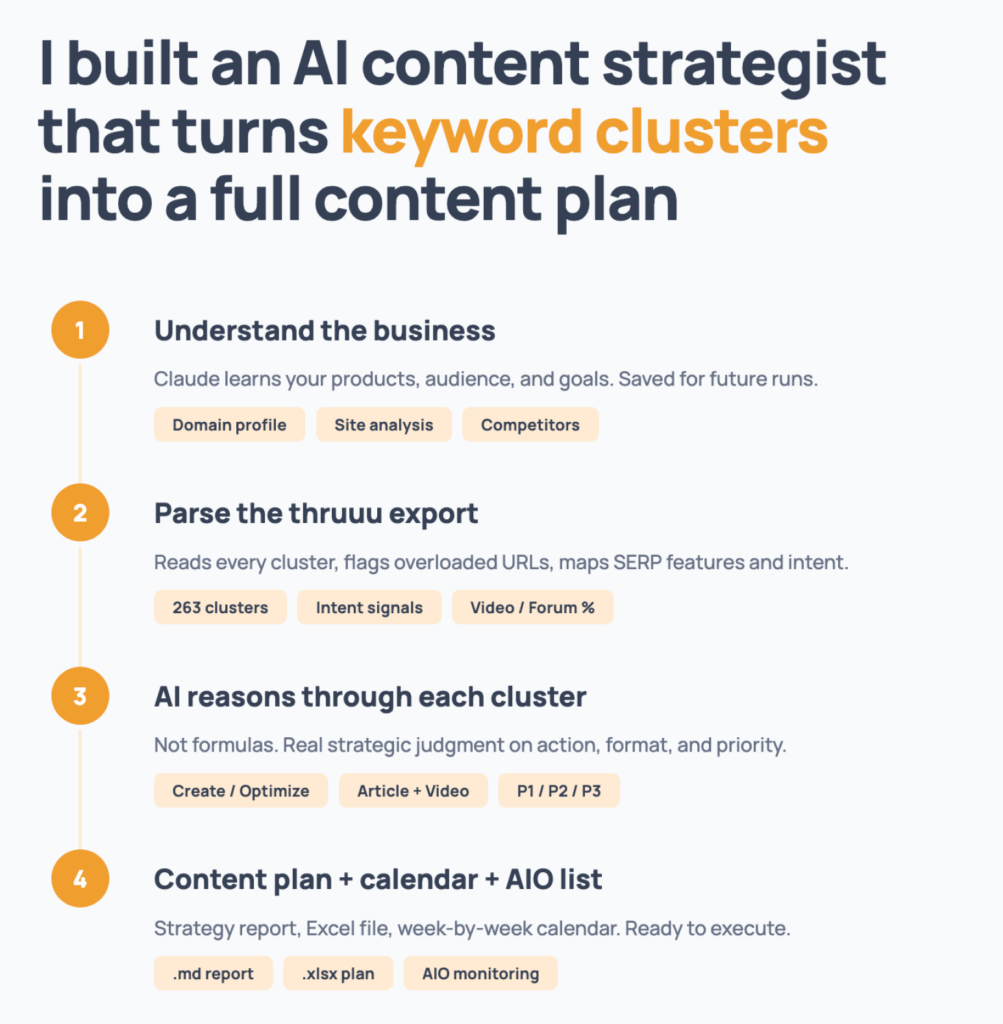
Step 1 – Understand the business
At the start, Claude asks about your business: what you sell, who your audience is, and your content goals. It runs a search to understand your existing content footprint.
This context is saved to a domain profile file.
Next time you run the workflow for the same domain, Claude loads it automatically. No repeating yourself.
Step 2 – Analyze keyword clusters
Claude reads the data from a thruuu keyword clustering export. It extracts every piece of information that matters: topics, keywords, volume, position, intent, SERP features (video, forum, AIO), and existing ranking URLs.
It also reads competitor data to understand the competitive landscape and flags pages that rank for too many clusters at once.
Step 3 – Reason through each cluster
This is where the AI logic lives. For each cluster, Claude decides three things:
Action: create, optimize, or skip. Not based on a formula, but on whether the existing page actually matches the cluster’s intent.
If your blog post about “SERP tracking tools” is the best URL for a cluster about “AI competitor monitoring,” that’s a mismatch. Claude catches it.
Format: article, video, forum engagement, or free tool. Claude checks the dominant SERP features for every cluster.
If video dominates the SERP, it recommends video. If Reddit threads are ranking, it recommends forum engagement. It doesn’t default everything to “Article.”
Priority: P1, P2, or P3. Weighted by product-market fit (heaviest signal), volume, competition level, and existing coverage.
A low-volume cluster that maps directly to your core product beats a high-volume cluster that’s tangential.
Step 4 – Generate the strategy output
Claude produces two files:
A markdown strategy report with an executive summary, the full content plan table, a week-by-week calendar, an AIO monitoring list, and a decision log explaining the key reasoning.
An Excel file with four tabs: Content Plan, Content Calendar, AIO Monitoring, and all Clusters annotated with Claude’s analysis.
Why keyword clustering is the foundation of this workflow
Before we get into the setup, let me explain why keyword clustering matters and why I chose thruuu as the data layer.
Keyword clustering groups keywords by intent. Instead of staring at 1,000 individual keywords, you work with 200 topic clusters. Each cluster represents one content opportunity. It cuts through the noise and shows you the actual topics to focus on.
But not all keyword clustering tools are equal.
thruuu groups keywords by SERP similarity, not by semantic guessing.
thruuu looks at the actual Google results for each keyword and groups those that share the same top-ranking URLs.
This means your clusters reflect how Google actually understands topics, not how a language model thinks they should be grouped.
For each keyword cluster, thruuu gives you:
- The search intent (informational, commercial, transactional)
- Your best ranking page and its current position
- The aggregated search volume across all keywords in the cluster
- The dominant SERP features (video, forum, AI Overview, PAA, featured snippet)
- The competition level based on the authority of ranking pages
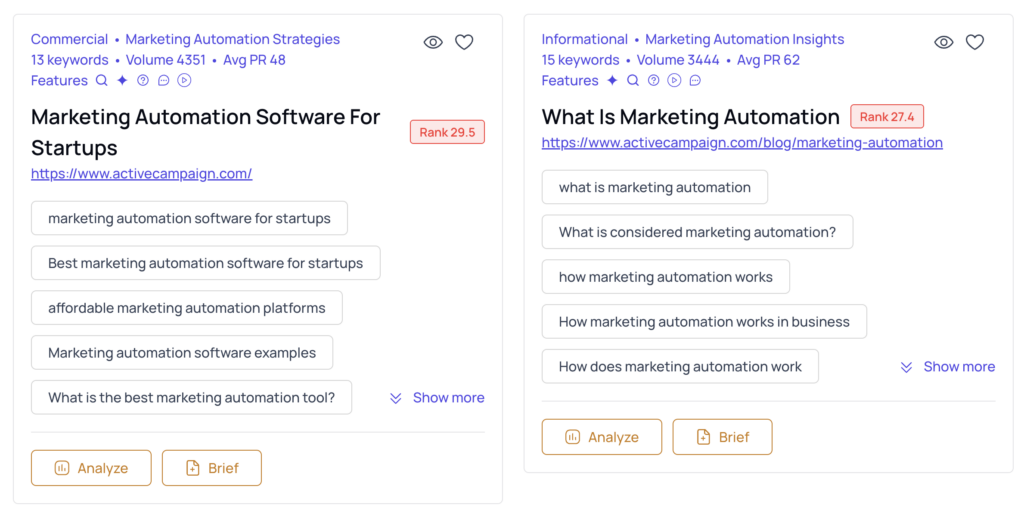
On top of that, each cluster can be analyzed in depth.
You can extract competitor data, see exactly how top-ranking pages structure their content, and create a content brief directly from the cluster view.
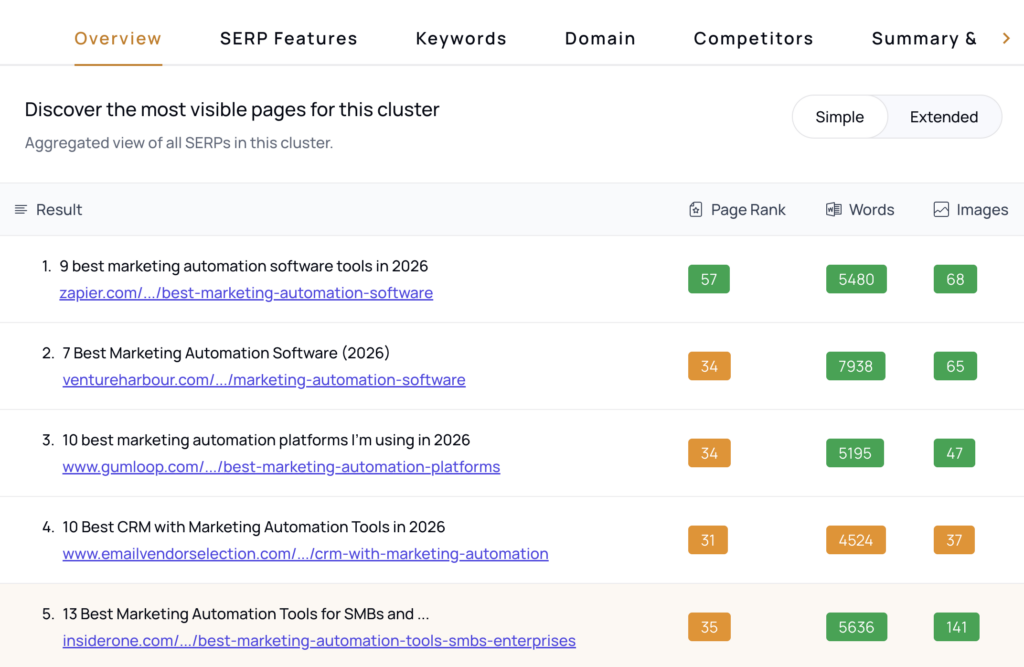
To get started, upload a list of keywords to the thruuu keyword clustering tool and start exploring your clusters.
Watch the tutorial here to learn more.
Now, thruuu is a very powerful SEO tool with deep analysis capabilities.
The trade-off is that some users feel overwhelmed by the amount of data. They don’t always know how to navigate the cluster results to spot the articles to focus on or the pages to optimize.
I wrote a guide on SEO keyword mapping to help with exactly that and another one on building a multi-format content strategy for AI search.
Both guides rely on Excel formulas and manual analysis.
Today, we go beyond spreadsheets. We take the best practices from both guides and let Claude Code do the SEO analysis.
How to get started
Set up Claude Code
Claude Code is Anthropic’s command-line tool that runs Claude as an autonomous agent. You need Node.js 18+ and an Anthropic API key.
npm install -g @anthropic-ai/claude-code
Clone the repo
The full setup lives in the thruuu content strategist GitHub repo.
git clone https://github.com/thruuu/thruuu-claude-content-strategist.git
The repo contains one file that does all the work: CLAUDE.md and a few examples.
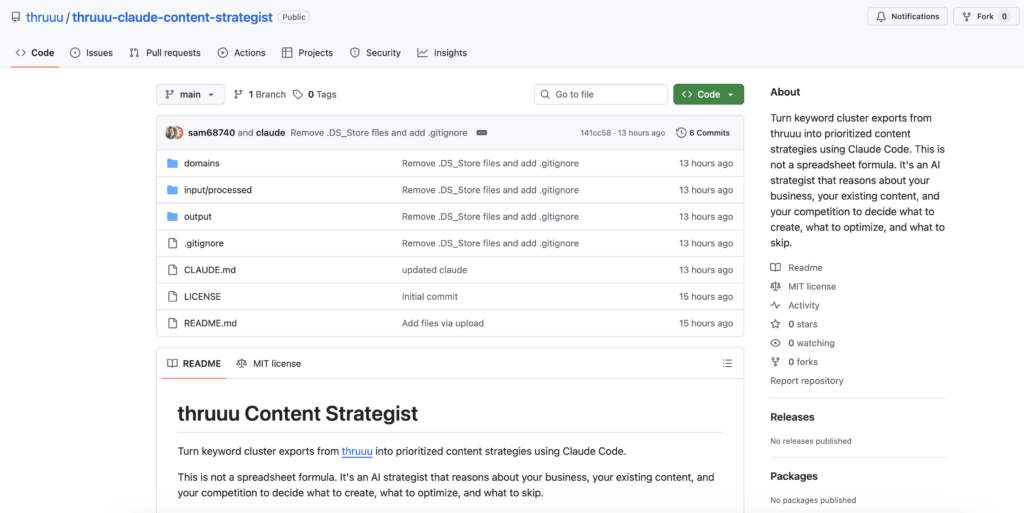
It defines the complete strategy workflow: how to parse the export, how to reason about each cluster, what to output, and what rules to follow.
This file contains thruuu’s best practices for content strategy, codified into instructions that Claude consistently follows.
Build your keyword clusters in thruuu
Before running the strategist, you need a thruuu keyword clustering export.
- Create a keyword clustering project in thruuu
- Upload your keyword list
- Run the clustering
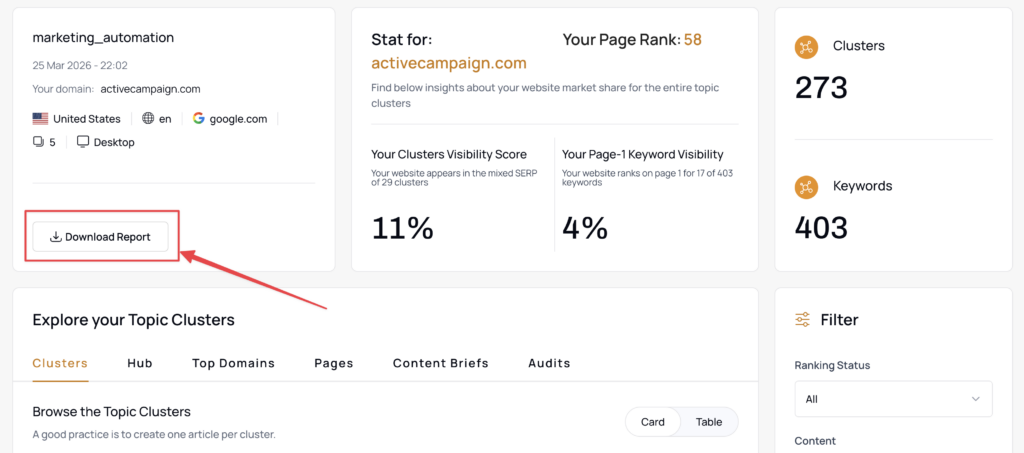
- Click “Download Report” at the top of the cluster dashboard
- Drop the downloaded XLSX into the input/ folder
Run the strategist
On the first run, Claude will ask about your business and save a domain profile. Then it parses the export, analyzes each cluster, and generates the output.
For a 500-cluster export, the full run takes roughly 10-15 minutes.
What the output looks like
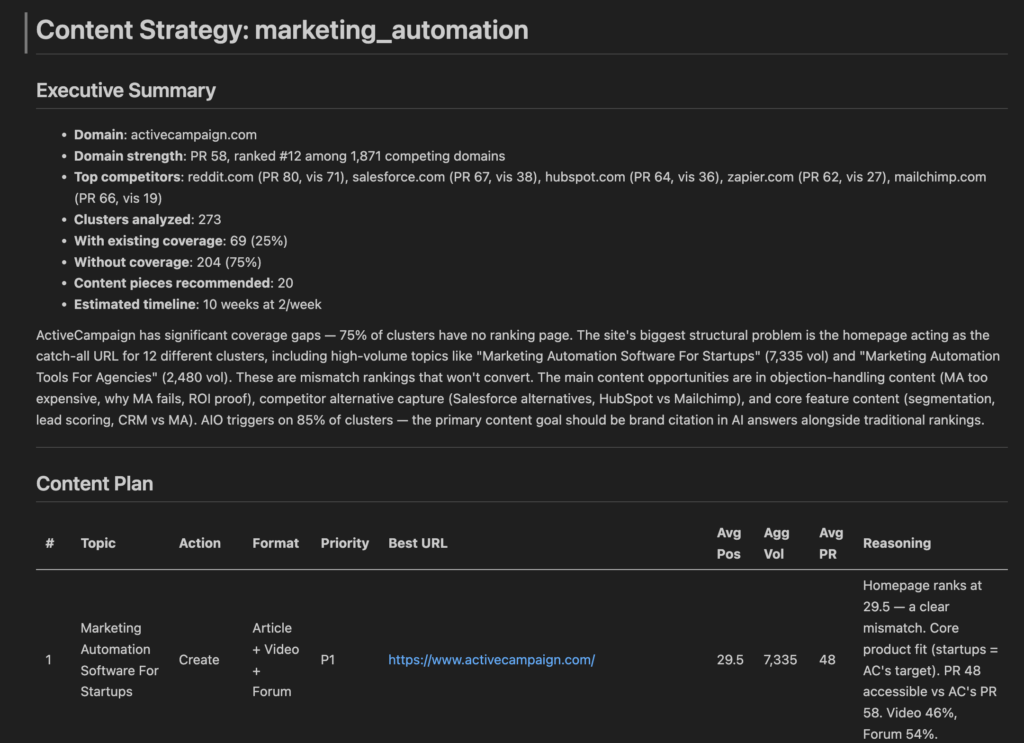
I tested the workflow on ActiveCampaign’s keyword clusters including 273 clusters around “marketing automation.”
Here’s what Claude found.

The executive summary tells you what matters first
The report opens with the key insight, not a wall of stats:
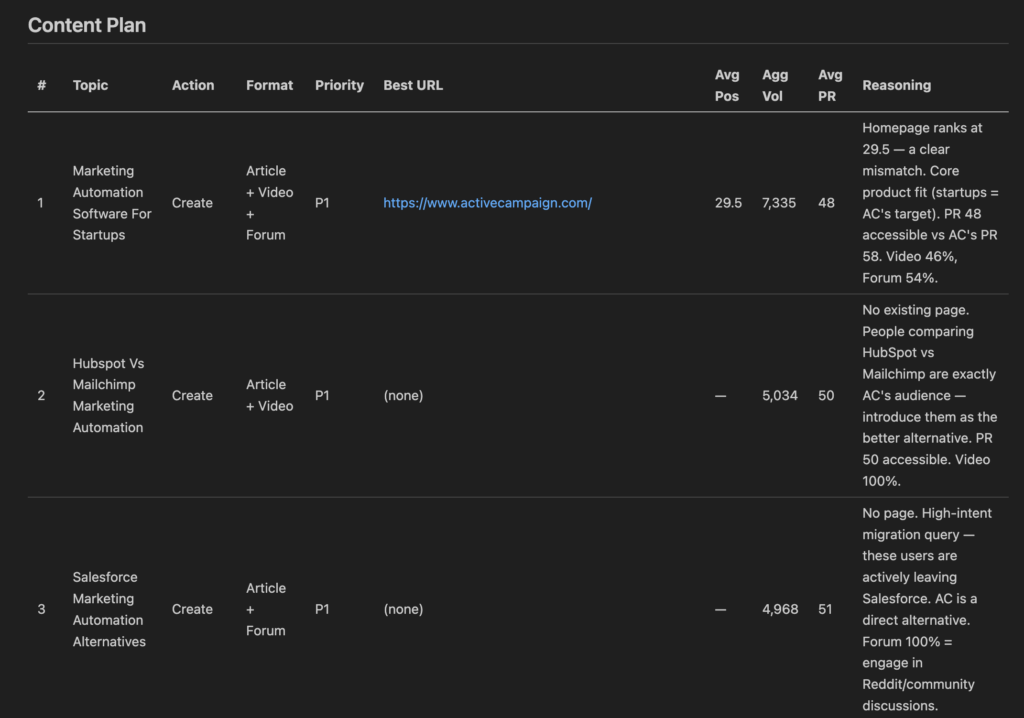
ActiveCampaign’s homepage ranks for 12 clusters, including “marketing automation software for startups,” at position 29.
These are mismatch rankings that won’t convert. The main opportunities are in competitor comparison content, objection-handling pages, and core feature articles.
Then it breaks down the plan: 20 P1 items, 30 P2 items, 10 weeks at 5 pieces per week.
The content plan shows the full picture.
Each row includes the topic, action (create or optimize), recommended format, priority, the existing URL and position, volume, competition level, and a short reasoning.
The competition column uses plain language instead of raw numbers: “Low (33)” means accessible, “High (53)” means tough.
The intent column (informational, commercial, transactional) helps you understand what type of content is needed.
Real strategic insights, not formula outputs
Here’s what makes this different from a spreadsheet:
- “Users searching ‘HubSpot vs Mailchimp’ are exactly ActiveCampaign’s audience. But there’s zero content capturing them.” A formula would never flag this. It would just show “no URL” and move on.
- “The lead nurturing blog post sits at position 18. One optimization effort lifts 5 related clusters at the same time.” A formula would list 5 separate optimization tasks. Claude groups them into one.
- “‘Marketing automation too expensive’ gets thousands of searches. A common objection with zero content addressing it.” A formula sees volume and competition. Claude sees a conversion barrier.
Google AI Overview monitoring as a deliverable
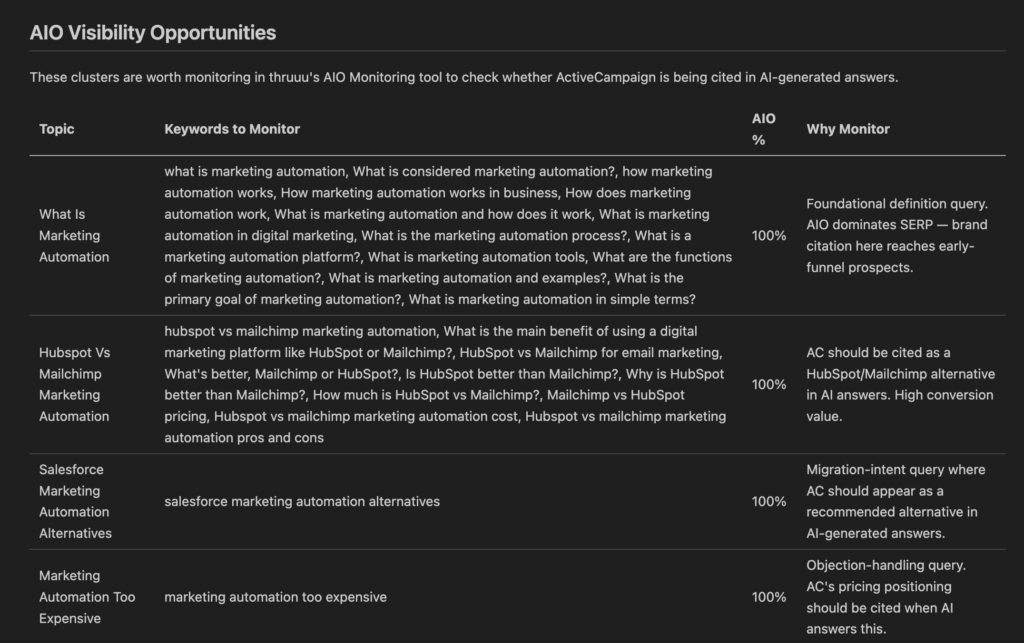
The report includes a list of clusters worth monitoring in thruuu’s AI Overview monitoring tool, with the full keyword list ready to copy-paste.
Where clusters show a high percentage of AI Overview in the SERP, it’s worth tracking whether your brand is being mentioned in those AI-generated answers.
This is becoming the new “position 1.”
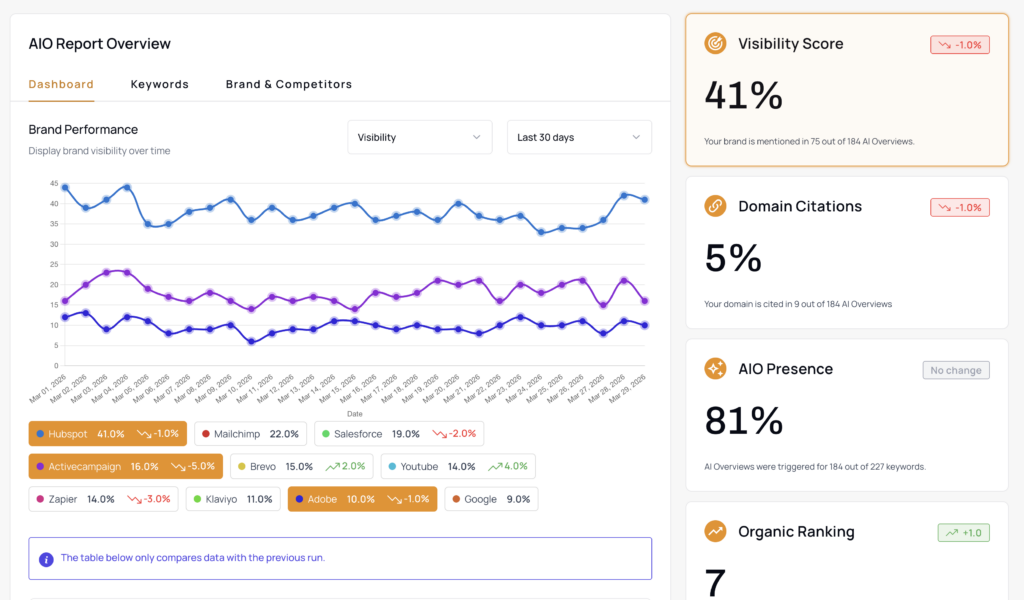
Go to thruuu, upload the keyword list into the AIO Monitoring tool, and start analyzing your brand presence. You’ll get:
- A visibility score showing how often your brand is mentioned
- A domain citations rate to see how often your domain is cited as a source
- An AIO presence rate to see how many of your keywords trigger AI summaries
- Your organic ranking performance across tracked keywords
- Competitor benchmarking and visibility trends over time through the dashboard
From strategy to execution
The content strategist tells you what to create and why. It doesn’t write the content.
For each topic in the plan, the next step is to open the cluster in thruuu, analyze the competing content, and create a content brief.
I want to stress the importance of creating detailed SEO briefs. A brief is the foundation of a good article.
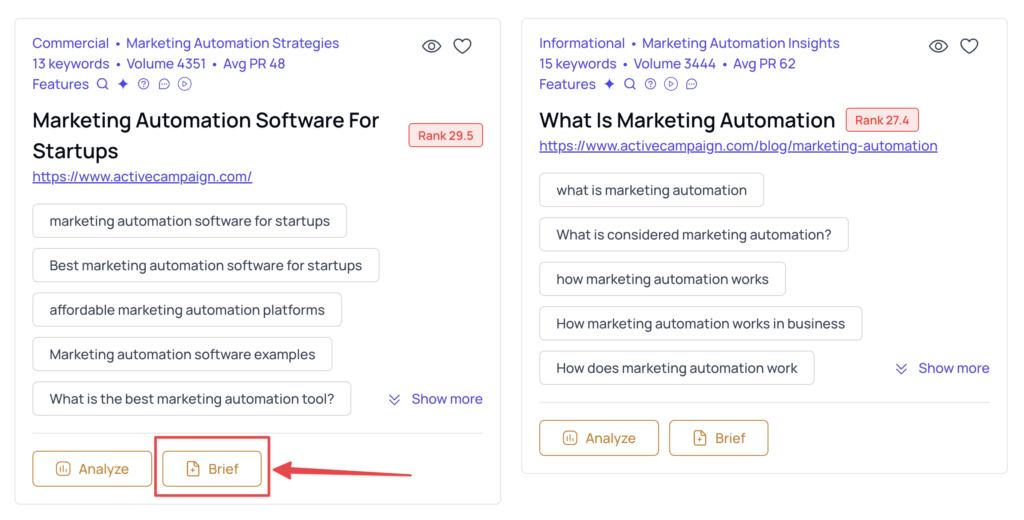
From thruuu, you can click “Brief” directly from a cluster view and get a prefilled content brief that you can enhance.
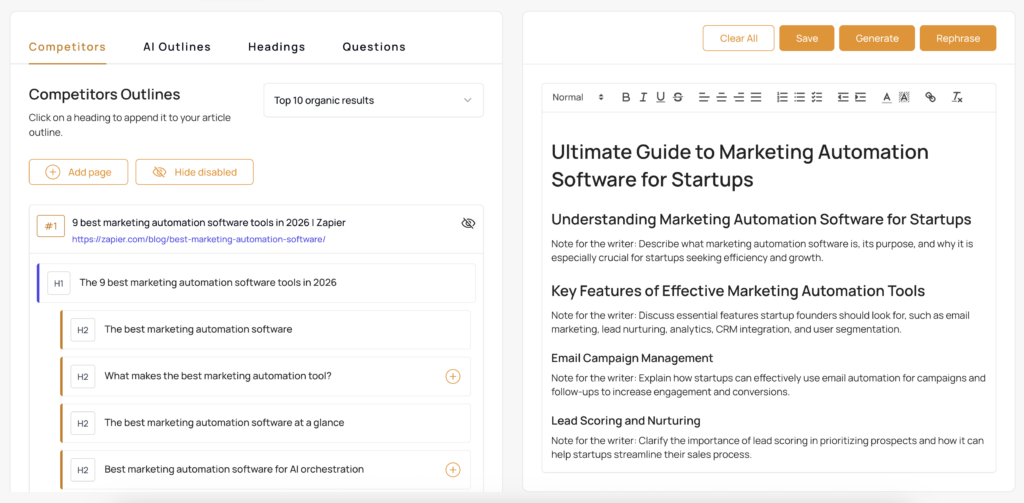
Spend time in the outline editor to craft a strong heading structure with detailed notes for your writer (or AI writer).
thruuu doesn’t offer AI writing support in the tool (yet). But you can use the thruuu Claude Writer to turn that brief into a draft.
I wrote about that workflow in detail in and explained how I write (almost perfect) SEO content with Claude.
The two tools work as a pipeline: the strategist plans what to write, the writer drafts it.
Here’s the full loop:
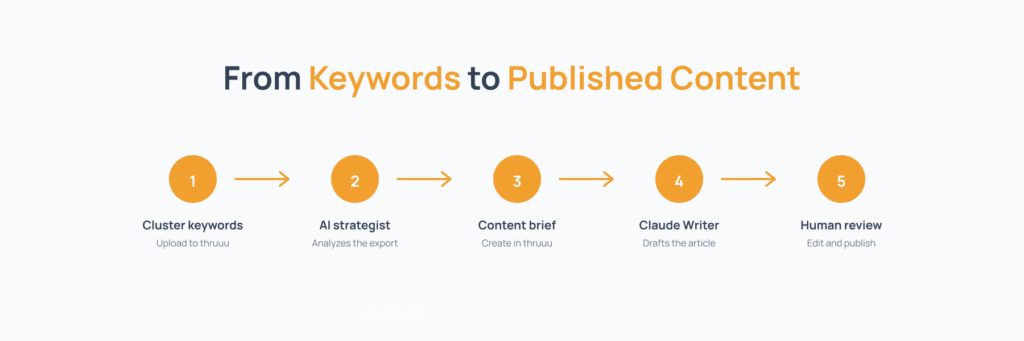
- Upload keywords in thruuu and cluster them
- AI strategist analyzes the export
- Open priority clusters in thruuu, create a content brief
- Claude Writer drafts the article from the brief
- Human review, editing, and publishing
That’s it. From keywords to published content.
What this workflow can and cannot do
Where it consistently delivers:
- Catches intent mismatches between existing pages and clusters
- Identifies overloaded pages that rank for too many different topics
- Recommends video and forum engagement when SERP data supports it, not just articles
- Prioritizes based on business fit, not just volume
- Produces a ready-to-execute calendar based on your production capacity
- Generates an AIO monitoring list you can upload directly to thruuu
Where a human still wins:
- Validating business context. Claude asks the right questions, but you know your business better. Review the priority assignments.
- Topic angles. Claude doesn’t have the cluster detail data (outlines, frequent topics, PAA). It recommends the action and format. You decide the angle after analyzing the cluster in thruuu.
- Edge cases. Some clusters need local knowledge. Is this topic trending in your industry? Is a competitor about to launch something? Claude can’t know.
The honest framing: Claude handles the analysis and prioritization that takes a strategist hours. You handle the judgment calls that require domain expertise.
Try it yourself
The full setup is open source:
- thruuu Claude Content Strategist on GitHub
- thruuu Keyword Clustering Tool (Get a free trial for up to 500 keywords)
Clone the repo, drop your thruuu export, run Claude Code. Your content strategy is 15 minutes away.
Empower Your Content Team
Our end-to-end content optimization solution empowers your team to crack the Google algorithm, craft exceptional content, and achieve remarkable organic search results.