

I typed “what are the best project management tools” into ChatGPT last week.
No blue links. Just a direct answer, six brand names, and a confident summary I never asked a search engine for.
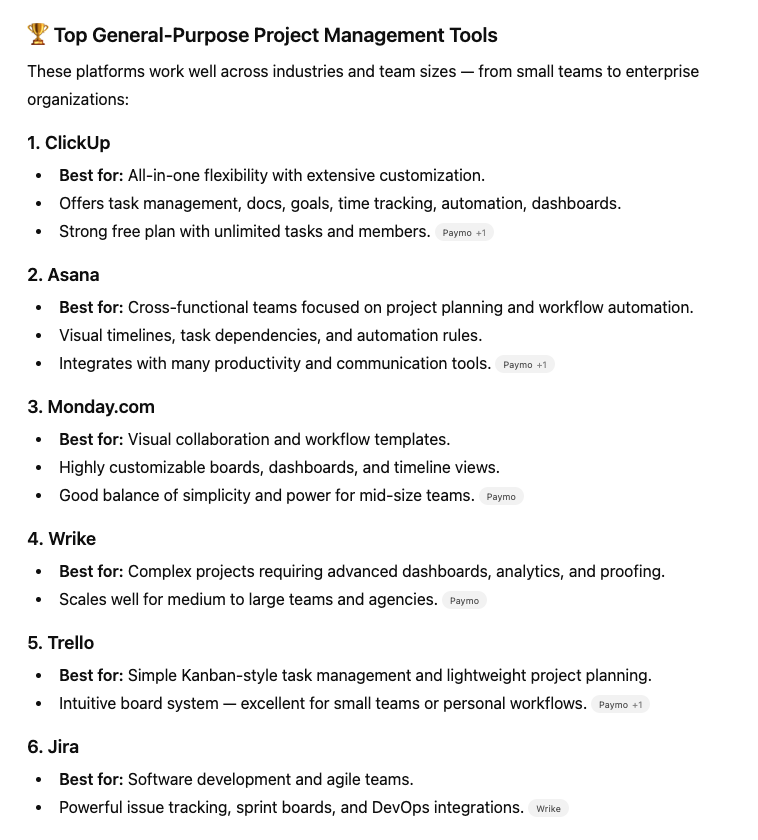
Google gave me ten links. ChatGPT give me one answer.
That shift has a name: Generative Engine Optimization, or GEO.
GEO is the practice of optimizing content so it gets cited by AI-powered answer engines like ChatGPT, Perplexity, and Google’s AI Overviews.
So here’s the real question.
If AI is generating the answers now, does your SEO playbook still work, or do you need an entirely different strategy?
In this guide, you’ll learn
- what actually separates SEO from GEO,
- which metrics matter for each,
- what’s trending in 2026
And how to build a GEO practice using tools like thruuu’s AIO Monitoring to track your visibility across both worlds.
Table of Contents
What is SEO? What is GEO?
SEO (Search Engine Optimization) is the process of optimizing web content to rank higher in traditional search engine results pages.
You target keywords, build backlinks, fix technical issues, and structure content so Google’s algorithm puts you on page one. The goal is clicks.
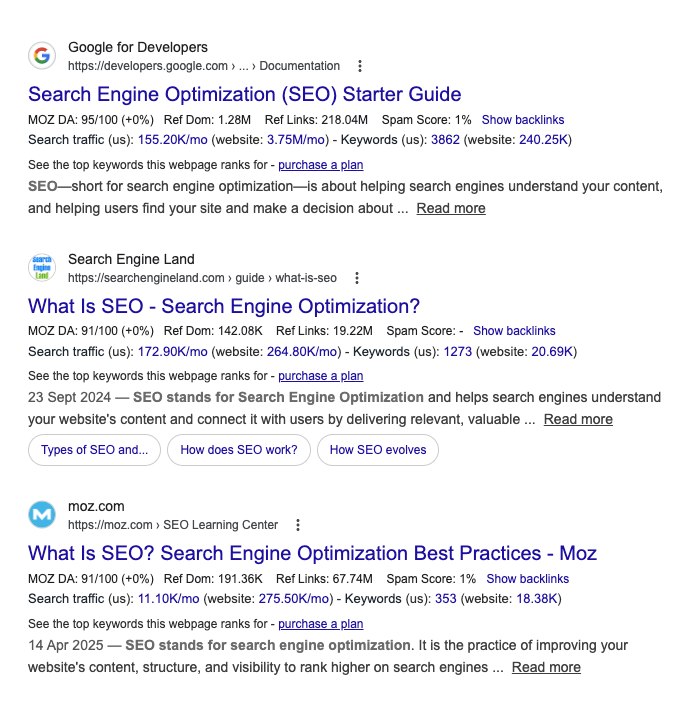
GEO (Generative Engine Optimization) is the process of optimizing content so AI-powered systems, like ChatGPT, Perplexity, and Google AI Overviews, cite or reference it in their generated answers.
The goal isn’t a click. It’s a mention.
A page ranking #1 on Google can be completely absent from ChatGPT’s answer, and a page on page three can be the one an LLM pulls from.
SEO rewards structure and authority. GEO rewards clarity, specificity, and factual density.
Both are optimization disciplines, but they optimize for fundamentally different behaviors.
SEO and GEO: What are the main differences
The surface-level answer is “SEO is for Google, GEO is for AI.”
The more useful answer is that they differ in audience, content format, and how you measure success.
Who Searches? Who Prompts?
SEO targets users who type short queries into Google and scan a list of links.
The average traditional search query is about 4 words. The user picks a result, clicks, and either bounces or stays.
GEO targets users who ask full questions to AI Chatbots.
According to Andreessen Horowitz’s research on generative search, the average LLM query is 23 words, and sessions last roughly 6 minutes.
These users don’t want ten options. They want one synthesized answer.
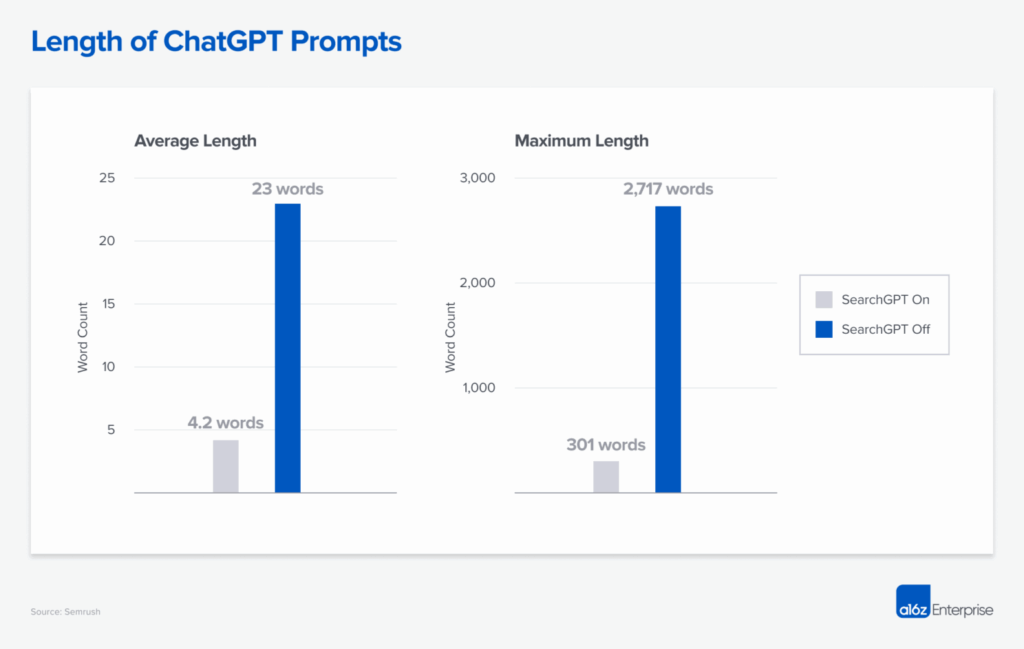
That’s a different search intent entirely.
SEO users are browsing. GEO users are delegating the research to an AI.
Your content needs to be structured so the AI trusts it enough to cite it, not just so a human clicks on it.
Best Formats for SEO? Best Formats for GEO?
SEO content is built for humans scanning a results page. You need compelling title tags, meta descriptions, and content structured with headers, images, and internal links.
GEO content is built for machines reading your page and deciding whether to extract from it.
That means clear “X is Y” definitions, structured data, bullet points, and factual density that an LLM can parse without ambiguity.
The irony?
Writing for machines in the GEO era actually means writing more clearly for humans too.
Short sentences. Specific claims. Named entities instead of vague references.
If ChatGPT can extract your point cleanly, so can a reader skimming at 2 AM.
Articles, videos, FAQ schemas, comparison tables, all of these work for SEO.
For GEO, the formats that perform best are well-structured articles, data-backed guides, and content with high entity density.
And also other formats like videos, and Reddit conversations.
Tools like Semrush, Ahrefs, and Clearscope help with SEO optimization.
For GEO, you need platforms that track AI citations and generative visibility, not just rankings.
Measuring GEO Success: Metrics and Tools
SEO success is measured by rankings, organic traffic, click-through rate, and conversions.
You know the drill. Google Search Console, Ahrefs, Semrush, Screaming Frog, the toolbox hasn’t changed much in a decade.
GEO success is measured by brand visibility and reference rates, how often AI models cite your brand or content in their answers.
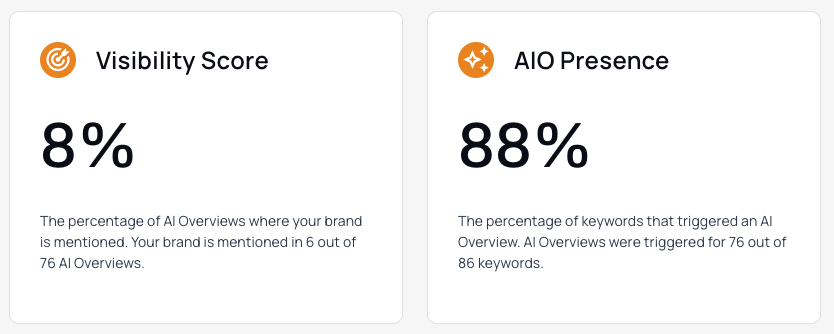
That’s a fundamentally different KPI.
You can have zero organic traffic from Google and still be the most-cited source in ChatGPT’s responses for your category.
Tracking GEO performance requires newer tools.
thruuu’s AIO Monitoring lets you track your brand’s visibility score across Google AI Overviews, showing which queries trigger AI summaries, whether your domain appears as a cited source, and where competitors are outperforming you.
It’s the closest thing to “rank tracking” for the generative era.
GEO and SEO trends in 2026
Three trends are reshaping how both disciplines work this year.
Expertise will be more valuable.
Google’s emphasis on E-E-A-T (Experience, Expertise, Authoritativeness, Trust) has only intensified.
LLMs are getting better at identifying content written by practitioners versus content written by content mills.
First-person experience, original data, and named expert sources now carry more weight in both traditional and generative results.
Generic advice is becoming invisible.
Zero-click searches keep rising
Google AI Overviews now appear for a growing share of informational queries, giving users the answer directly on the SERP.
For SEO, that means fewer clicks even when you rank #1.
For GEO, it means the AI Overview itself is the battleground, and being cited as a source inside that overview is the new “position one.“

The search journey is getting messier
Google’s own research on the “messy middle” showed that purchase decisions don’t follow a neat funnel.
Users loop between exploration and evaluation unpredictably.
In 2026, it’s worse.
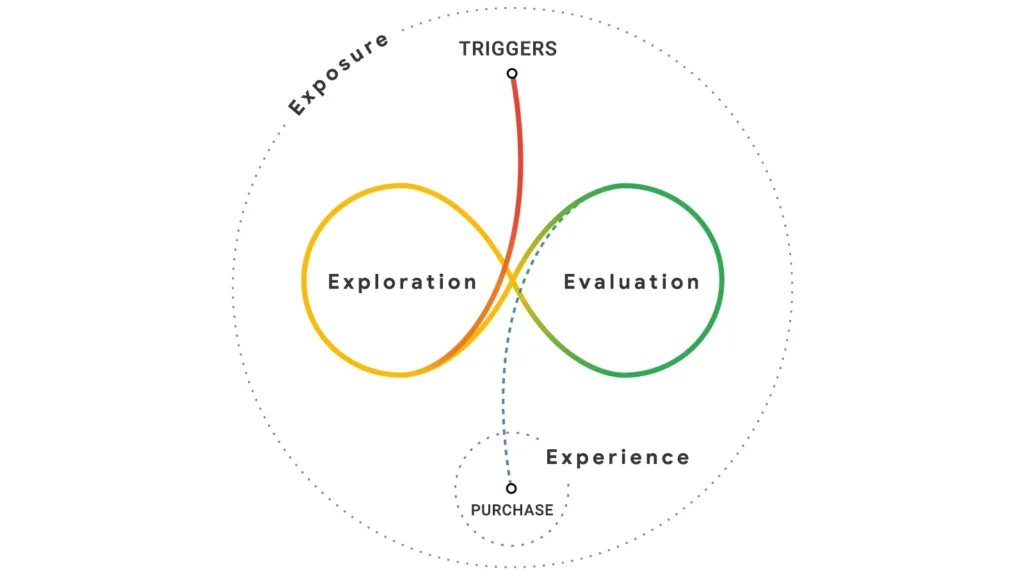
Now they loop between Google, ChatGPT, Reddit, YouTube, and TikTok.
And AI agents have their own journey with query fan out…
Your content needs to show up across multiple touchpoints, which means optimizing for both traditional and generative engines isn’t optional. It’s survival.
How to get started with GEO
You don’t need to throw out your SEO playbook. You need to extend it.
Developing a Strategy for GEO and SEO
Start with what you already have. Audit your top-performing SEO content and ask: would an LLM cite this?
If the answer is “probably not,” here’s what to fix:
- Add definitive statements. Replace vague intros with “X is Y” definitions. LLMs love clear, extractable facts.
- Increase entity density. Name specific tools, brands, platforms, and people. A paragraph with zero named entities is almost invisible to generative engines.
- Structure for extraction. Use bullet points, numbered lists, comparison tables, and FAQ sections. Make it easy for an AI to pull a clean answer.
- Front-load the insight. Put your key finding in the first 20% of each section. LLMs weigh early content more heavily.
This isn’t a rewrite. It’s a layer you add on top of existing SEO best practices. The content that ranks well and gets cited is content that does both.
Practical Applications and GEO Case Studies
NextLeft, an SEO and digital marketing agency, adopted thruuu’s SERP Analyzer and keyword clustering tools to integrate GEO into their content workflow.
The platform helped them detect which queries triggered AI Overviews and where topical authority gaps existed.
The results: 10x faster content planning, a 3x increase in content production without adding staff, and 60% of their content now triggers AI citations within six months.
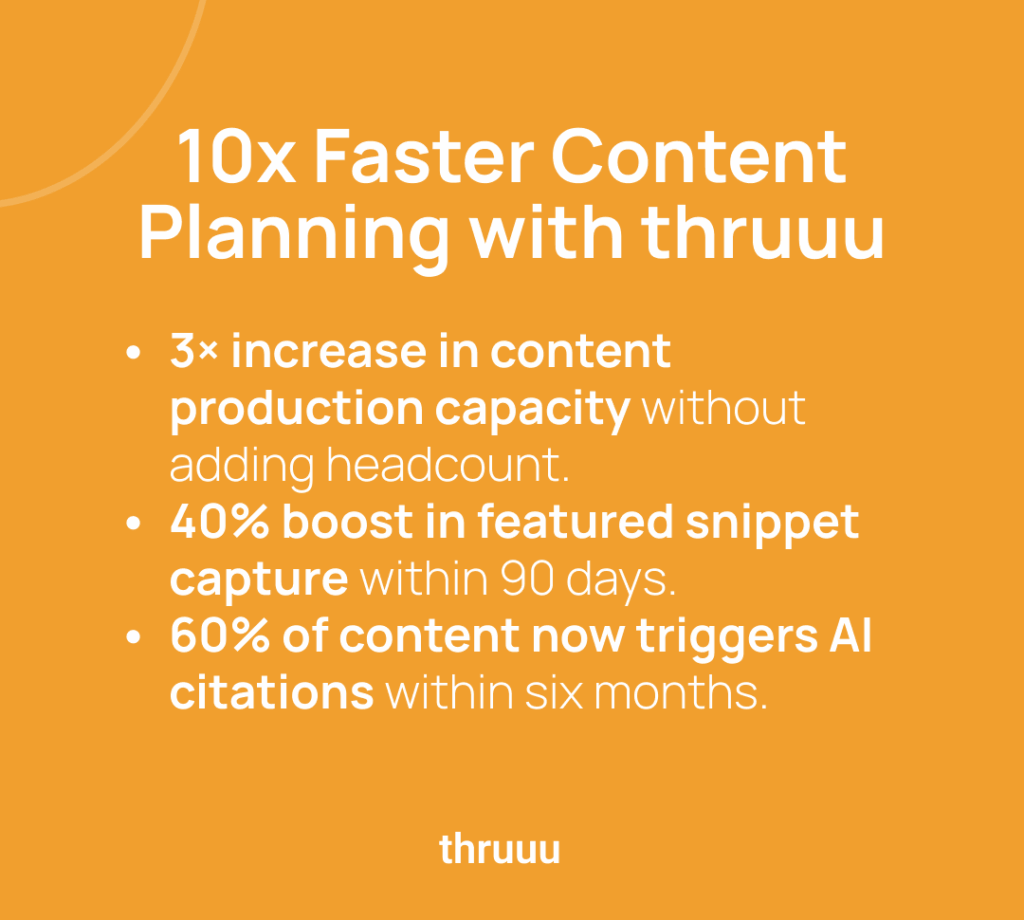
Their founder John McKusick called thruuu “one of our secret weapons in the recipe for winning in AI search.”
That’s the kind of outcome you get when SEO and GEO work together instead of being treated as separate channels.
You can read the full case study on thruuu.
Best Tools to help you with GEO
For GEO specifically, you need tools that track what traditional SEO platforms can’t: your visibility inside AI-generated answers.
thruuu’s AIO Monitoring tool is built exactly for this.
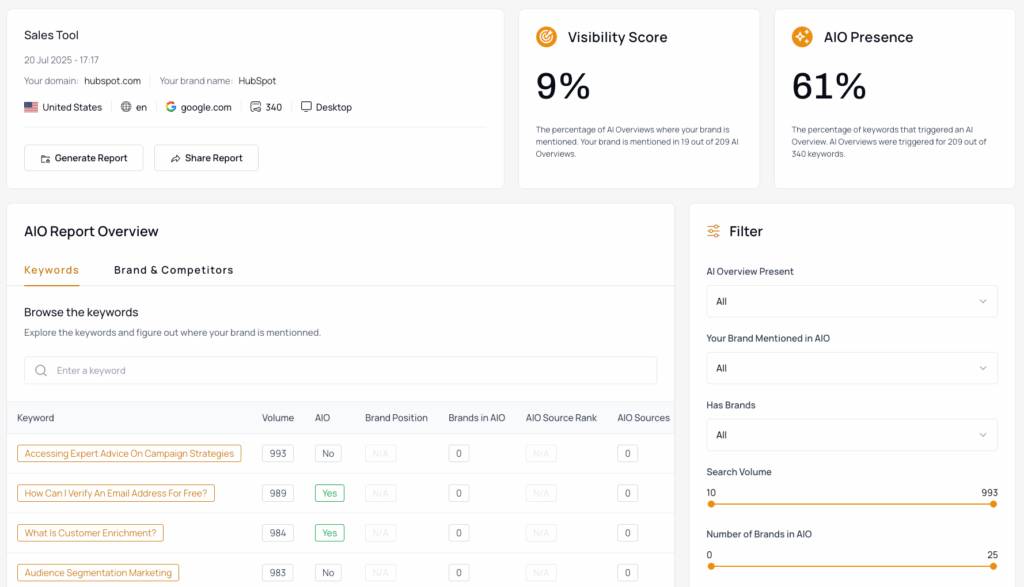
It tracks your brand’s presence across Google AI Overviews for hundreds of keywords simultaneously.
You get a visibility score, source citation data, competitor benchmarking, and keyword-level insights showing where your domain appears as a cited source versus where it doesn’t.
The real power is in finding what thruuu calls “visibility gaps,” keywords where your domain is a source but your brand isn’t mentioned by name in the AI answer.
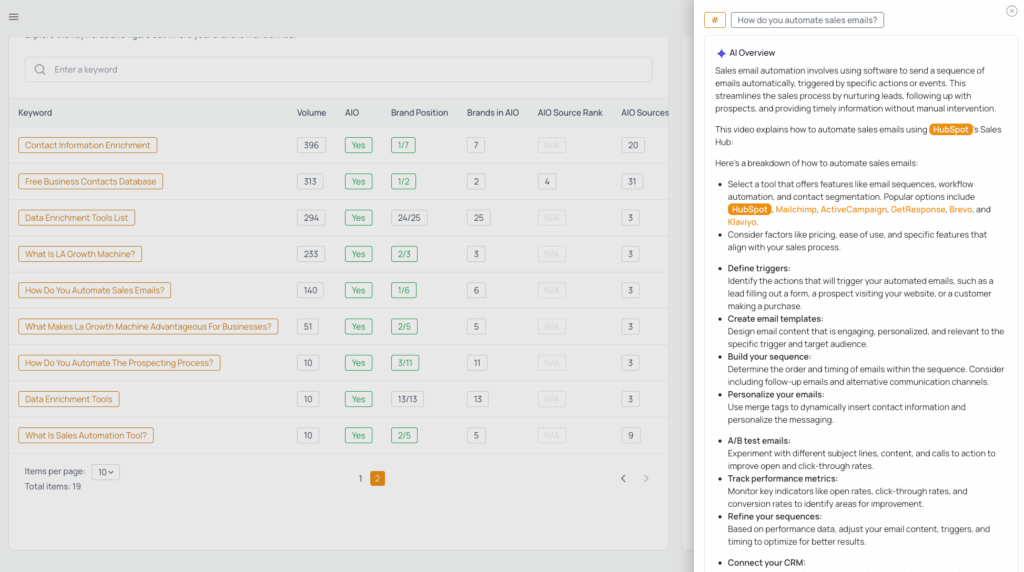
Those are your highest-ROI optimization targets.
You can explore how to monitor your AI Overview visibility to see it in action.
Is SEO Dead… And replaced by GEO?
Every time a new channel emerges, someone declares SEO dead.
Social media was supposed to kill it.
Voice search was supposed to kill it.
Now AI is supposed to kill it.
SEO is not being replaced by GEO. It’s being expanded by it. The fundamentals, quality content, technical excellence, topical authority, still matter.
What’s changed is where that content needs to perform. It’s no longer enough to rank on Google.
Your content also needs to be structured, cited, and trusted by AI systems that synthesize answers from multiple sources.
The brands that win in 2026 are the ones that stop asking “SEO or GEO?” and start asking “how do I optimize for both?”
Because generative engine optimization isn’t a replacement for search engine optimization. It’s the next layer.
No, SEO is not dead.
Empower Your Content Team
Our end-to-end content optimization solution empowers your team to crack the Google algorithm, craft exceptional content, and achieve remarkable organic search results.