

Want to know which headings your competitors use and which topics AI engines consider important for your keyword?
With the Heading Analysis tool in thruuu, you can explore the most common H2 and H3 headings found across top-ranking Google pages and pages cited by AI search engines.
The tool clusters similar headings together, ranks them by coverage, and flags topics that only AI sources cover.
What the Heading Analysis does:
- Cluster similar headings from organic and AI-cited sources into topic groups
- Show a coverage tier (Very High, High, Medium, Low) for each cluster so you know what’s essential vs. niche
- Flag headings with an “Only Cited by AI” badge when no organic result covers that topic
- Surface Content Opportunities: heading ideas that no source covers yet
- Display keyword chips for each cluster to connect headings to search terms
- Let you drill into every source behind a cluster, with search position and engine attribution
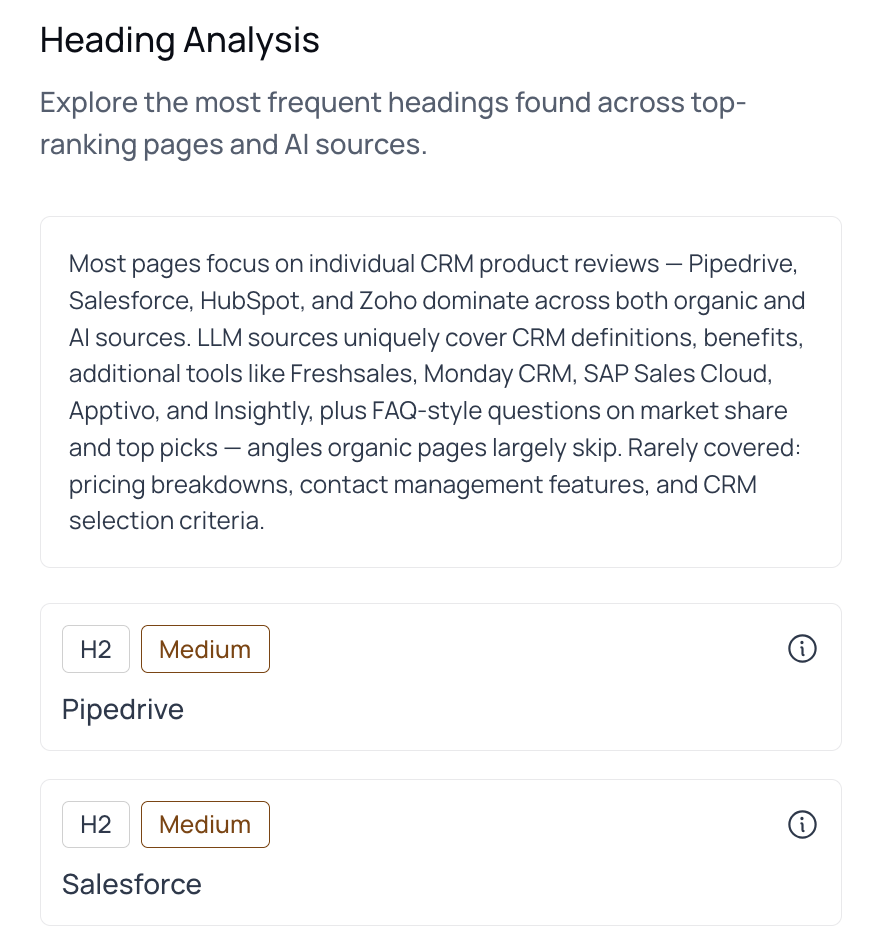
If you’re building a content outline, the Heading Analysis in thruuu shows you both the consensus (what most pages cover) and the gaps (what only AI sources mention or what nobody covers yet).
Overview of the Headings Analysis Tool
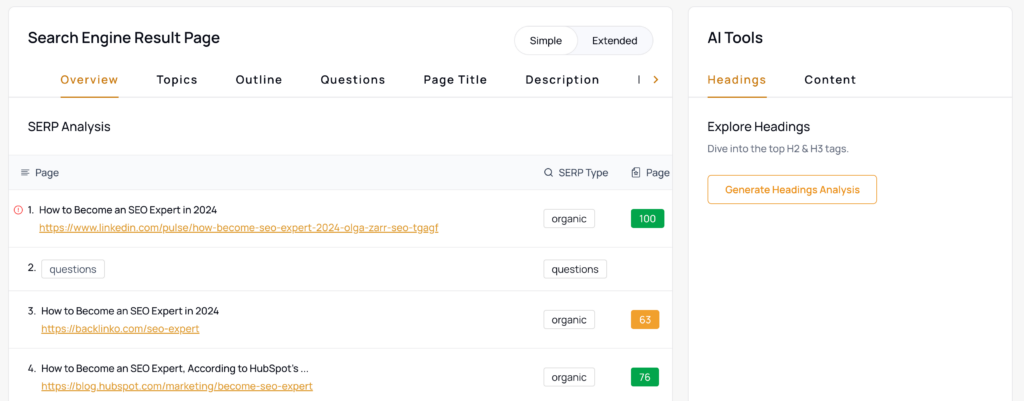
The Heading Analysis lives inside the thruuu SERP Analyzer, under the AI Tools panel. Select the Headings tab and click “Generate” to run the analysis. Results appear automatically once the analysis completes, with no page refresh needed.
The tool pulls headings from two source pools:
- Organic results: Up to 10 top-ranking pages from Google
- AI-cited sources: Up to 20 pages cited by AI engines (ChatGPT, Gemini, Perplexity, Google AI Mode), shared fairly across engines with no single engine taking more than 10 slots
If your SERP analysis doesn’t include AI engines, the Heading Analysis runs on organic results only
How the Report Works
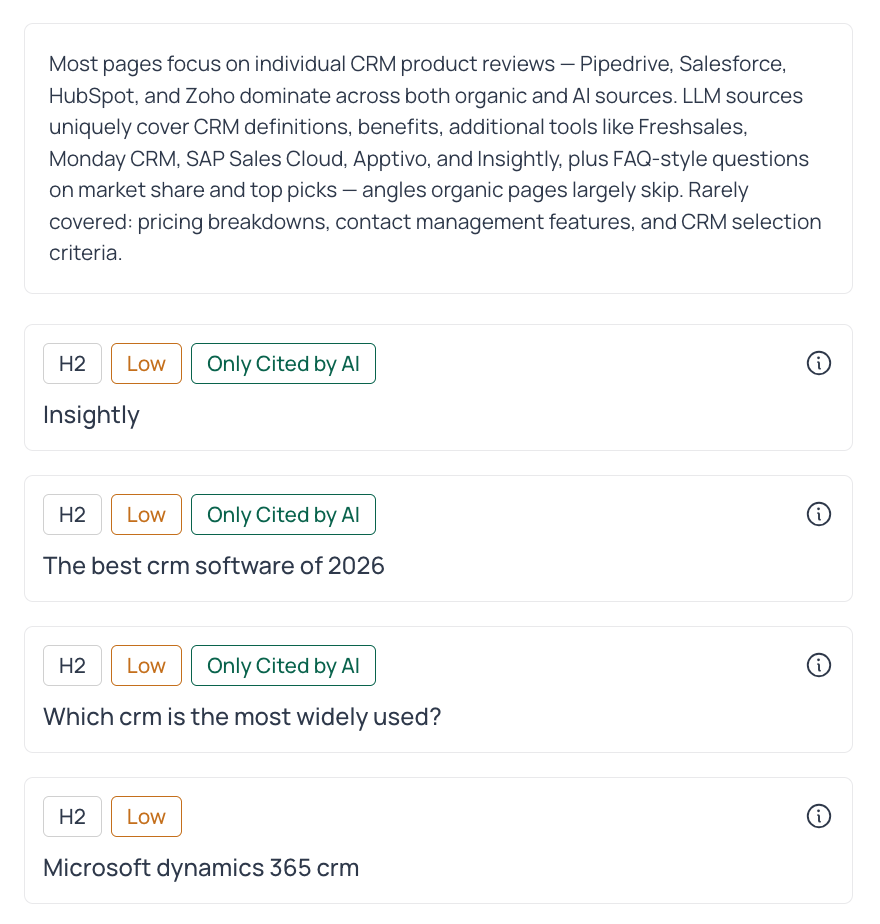
The report starts with a summary paragraph describing the overall heading landscape for your keyword: what most pages focus on, what AI sources uniquely cover, and what’s rarely discussed.
Below the summary, each heading cluster appears as a card showing:
- Heading level: H2 or H3
- Coverage tier: How many sources cover this topic
- Cluster label: The topic name
- Info icon: Click to open the source side panel
Coverage Tiers
A cluster’s coverage tier tells you what share of all source pages use a heading on that topic:
- Very High (70%+ of sources): Core topics. Almost every page covers this. Your content likely needs to include it.
- High (50–69%): Strong consensus. Most pages address this topic.
- Medium (20–49%): Moderate coverage. Worth including if relevant to your angle.
- Low (under 20%): Niche or emerging topics. Can help differentiate your content.
“Only Cited by AI” Badge
Some clusters carry an “Only Cited by AI” badge. This means every source in that cluster comes from an AI engine. No organic Google result covers that heading topic at all.
This badge is intentionally strict. It only appears when there is zero organic coverage, marking a genuine gap between what traditional search results cover and what AI engines consider relevant.
Source Side Panel
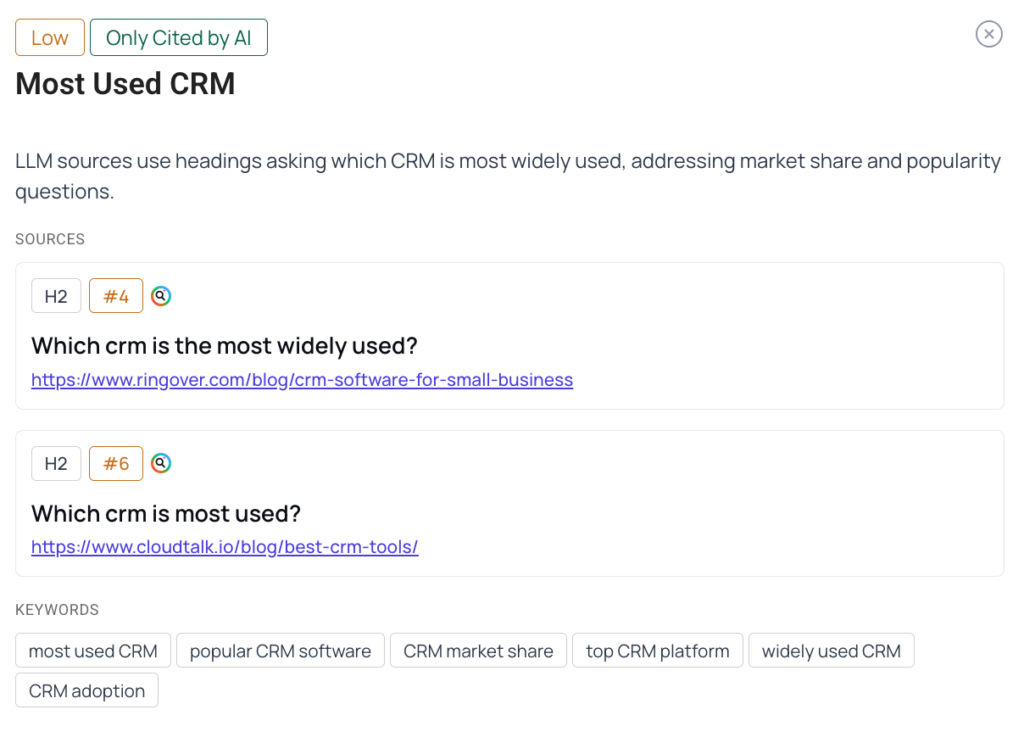
Click the info icon on any cluster card to open the side panel. For each source, you’ll see:
- Heading level (H2 or H3)
- Search position (e.g., #5, #9)
- Engine icons showing which search engines cited this page (Google, ChatGPT, Gemini, Perplexity, Google AI Mode)
- The actual heading text used by that page
- Source URL
- Keyword chips at the bottom showing related search terms
In the heading source panel, each URL appears only once. If a page was cited by both Google and Perplexity, you’ll see both engine icons on the same row.
Content Opportunities
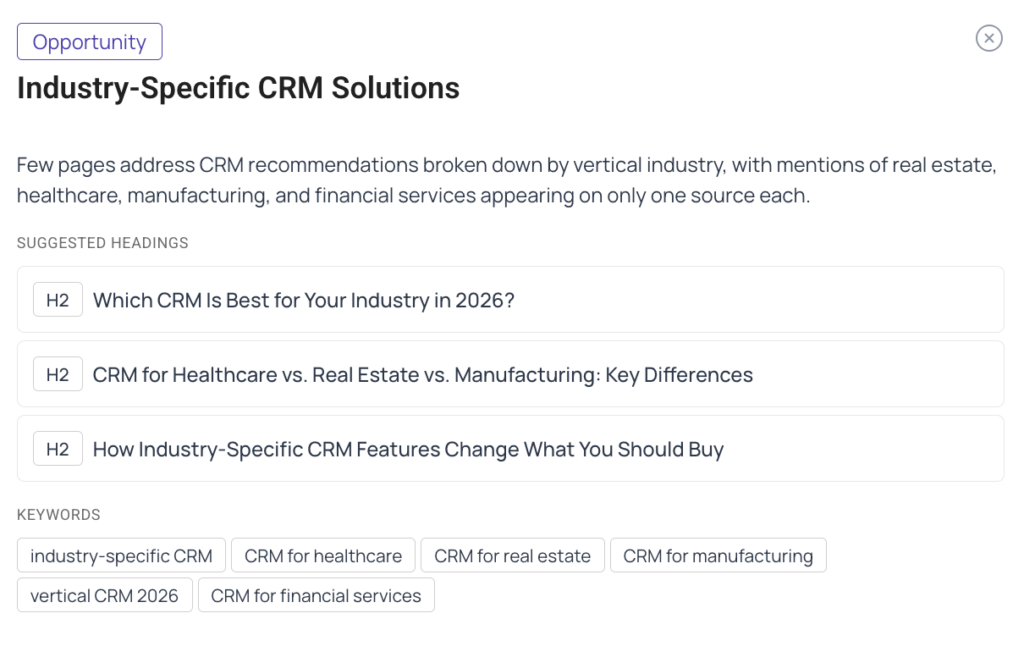
Below the heading clusters, you’ll find a Content Opportunities section. These are heading ideas that no (or a few) ranked page currently covers well.
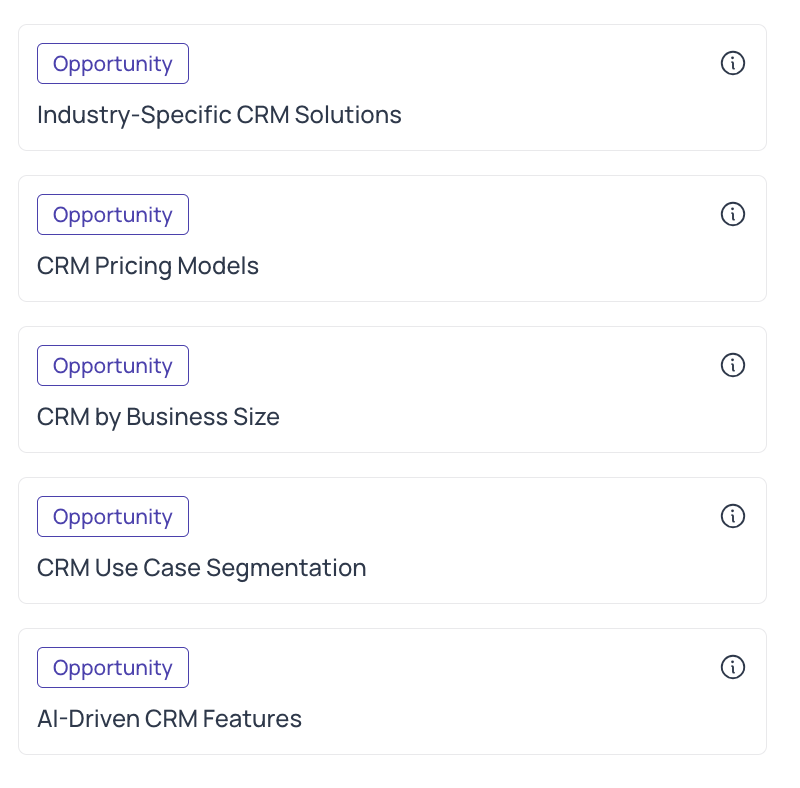
Each opportunity card includes:
- A topic label
- A short description explaining the gap
- Suggested headings (H2 level) you could use
- Keyword chips to connect the idea to search terms
These aren’t existing clusters. They’re greenfield ideas generated by analyzing what’s missing across all sources. Use them to add sections to your content that none of your competitors have.
How to Get Started with the Heading Analysis
The Heading Analysis is built directly into the thruuu SERP Analyzer.
Steps to get started:
- Create a free thruuu account (if you don’t have one yet).
- Log in and open the SERP Analyzer page.
- Enter a keyword and launch your SERP analysis.
- Open the AI Tools panel and select the Headings tab.
- Click “Generate” and wait for results to appear.
What Plan Do You Need?
The Heading Analysis is available on Pro and Agency plans. No extra credit cost. The analysis is included as part of your SERP analysis.
Tips to Make the Most of the Heading Analysis
- Start with coverage tiers. Very High and High clusters tell you what your content must cover to match search intent. Don’t skip these unless you have a strong reason.
- Look for the “Only Cited by AI” badge. These topics are invisible in traditional SERP analysis. If AI engines care about them but no organic result covers them, adding a section on that topic gives you an edge in both AI citations and traditional SEO.
- Use Content Opportunities to differentiate. The suggested headings and keyword chips give you a ready-made outline for sections that no competitor has. This is where the thruuu Heading Analysis goes beyond what a manual SERP review can do.
- Check the source side panel before committing. A “Medium” cluster might be covered by 3 low-authority pages or by 2 top-5 results. The side panel shows you the actual sources so you can judge whether the topic is worth including.
- Combine with the Content Analysis. The Heading Analysis tells you what topics to cover. The Content Analysis (Agency plan) tells you what those topics actually say. Use both together to build a complete brief.
Ready to Explore Headings from Google and AI Sources?
See what your competitors cover, what AI engines prioritize, and where the gaps are.