
68% of Google AI Overviews cite pages that don’t rank organically in the top 10.
That means your competitors could be stealing visibility from you right now, and your traditional rank tracker would never show it.
We tested several tools that track competitor presence in Google AI Overviews and compiled the five best options for 2026.
Here are the five tools that show you exactly who’s getting cited and why.
Table of Contents
Comparison Table of the Best AI Overview Competitor Analysis Tools
| Tool | Coverage | Strength | Best for | Pricing |
| thruuu | Google-first AIO analysis | Deep content + competitor analysis | SEO teams & agencies needing deep Google AIO competitor analysis. | starts at $19 per month(plus free trial) |
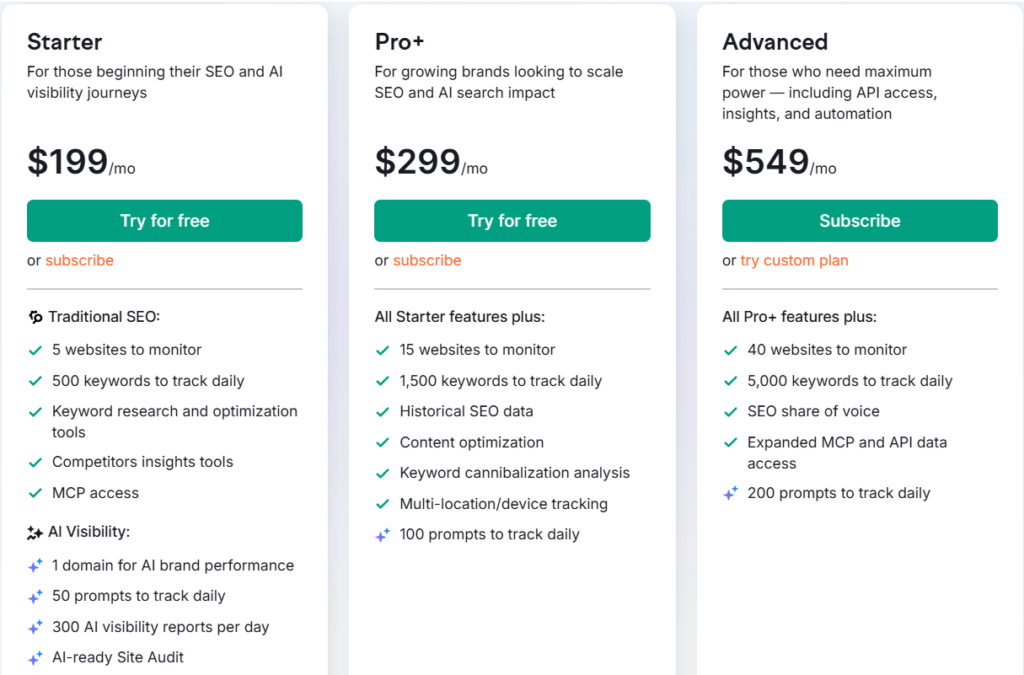
| Semrush AI Overview Visibility Checker | Google AI Overviews inside SEO suite | Integrated with full SEO suite | Teams already in Semrush adding AIO monitoring. | starts at $99 per month |
| Ahrefs Brand Radar | Multi-platform AI visibility(Google, ChatGPT, Perplexity, Gemini, Copilot) | Brand share-of-voice tracking | Measuring AI visibility across competitors | $199 per month |
| seoClarity | Enterprise Google AIO tracking | Enterprise-scale tracking | Enterprise SEO teams managing thousands of keywords across markets. | Custom pricing |
| SE Ranking | Google + Perplexity | Affordable monitoring | Small‑to‑mid teams wanting affordable AIO + Perplexity monitoring. | $129 per month(14-day free trial) |
How to Choose the Right Tool for Competitor Analysis in AI Overviews
- Check What Metrics the Tool Tracks: Look for tools that track more than whether an AI Overview appeared. At a minimum, you want an AI visibility score, citation frequency, and share of voice against competitors.
- Demand Keyword and Prompt‑Level Granularity: You need to see competitor behavior at the query level. You should know which brands are cited per keyword, how many sources appear in each answer, and whether your domain is being used as a source even when your brand name isn’t mentioned.
- Decide between Google‑Only and Multi‑Platform Coverage: If your main traffic comes from Google, a Google‑first tool often gives deeper insights for that one channel. If you care about visibility in ChatGPT, Perplexity, or Copilot, you need a multi‑platform tool.
- Integrate with Your Existing System: A good AIO‑competitor tool should fit into your existing workflow, offering export options, dashboard integrations, and shareable reports rather than creating new ones.
- Match Cost and Scalability to Your Team: AIO monitoring tools run from mid‑range to enterprise‑grade. Small teams usually don’t need more than a Google-focused tool. Agencies managing multi-platform strategies will need something broader and should budget accordingly
5 Best AI Overviews Competitor Analysis Tools
thruuu
Best for: SEO teams and agencies that need deep Google AI Overviews competitor analysis, and client-ready reporting.
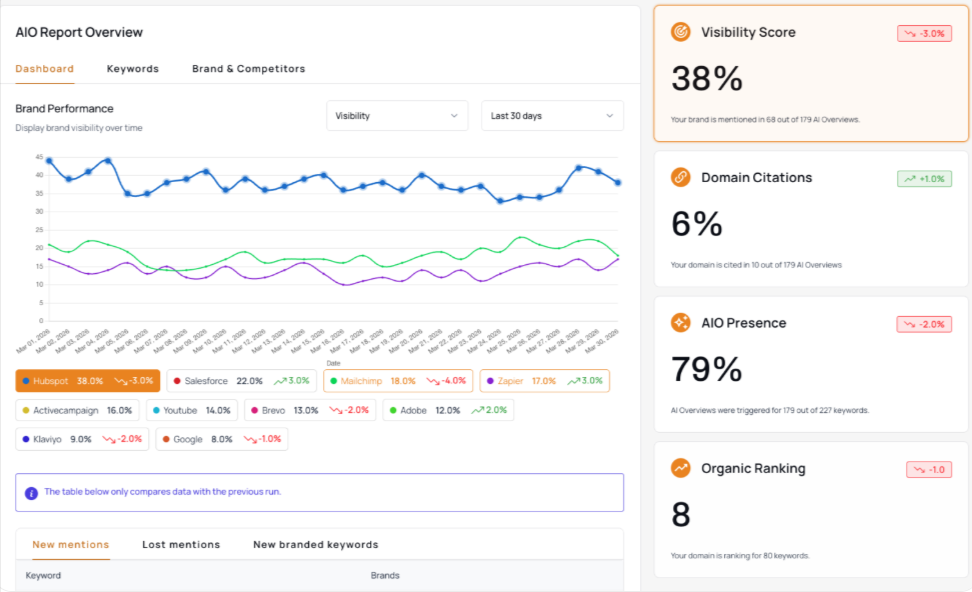
thruuu AIO monitoring tool scrapes Google directly for every tracked query and separates brand mentions from domain citations in your AI Overview reports.
That distinction matters because your content can earn citations without Google naming your brand, and closing that gap requires a different fix than building citations from scratch.
With scheduled reports and automated email alerts, you catch competitor gains as they happen instead of discovering them weeks later during a manual audit.
How to Use thruuu’s AIO Monitoring Tool to Analyze Competitors in Google AI Overviews
Step 1: Upload Your Keywords and Configure SERP Settings
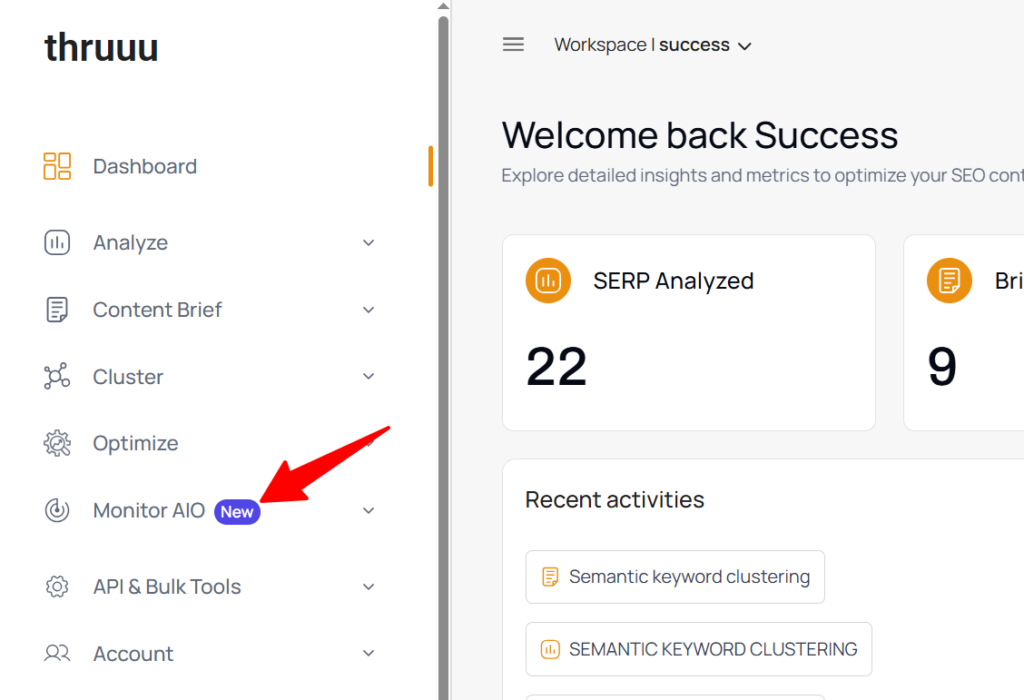
Sign up for thruuu and click “Monitor AIO > Create AIO Report” in the left-side bar drop-down menu.
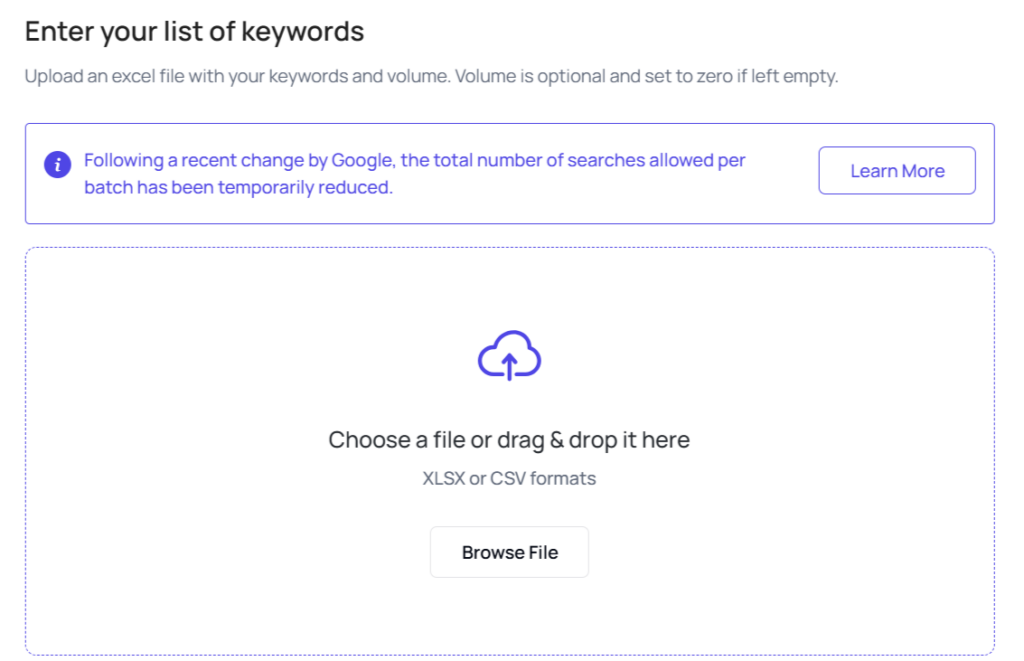
Upload the list of keywords you want to monitor. Once uploaded, select your target country, language, and device type.
One thing worth noting: AI Overviews might not be available in every country. If you select a location where Google has not rolled out AI Overviews, those summaries will not appear in your report, regardless of how many keywords you track.
Finally, choose between a One-Shot report for a quick audit or a Scheduled report for ongoing monitoring with automated email alerts.
Run the report and let thruuu scrape Google directly for each query.
Step 2: Read Your Dashboard Metrics
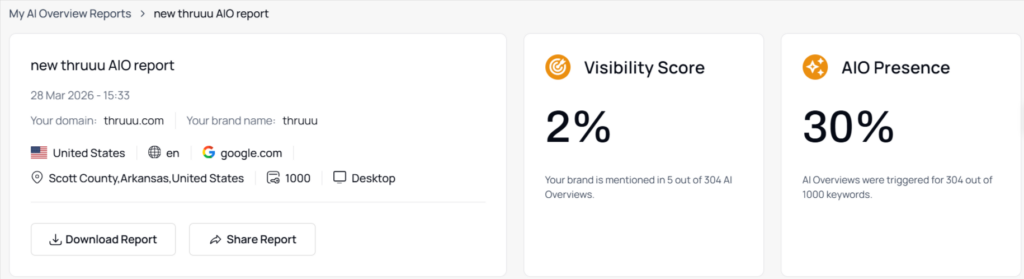
When your report loads, two headline metrics set the context for everything else you will analyze:
Visibility Score shows the percentage of AI Overviews where Google mentions your brand by name. If you track 340 keywords, 209 of them trigger AI Overviews, and your brand appears in 19 of those summaries, your Visibility Score is 9%. That number tells you how often your brand earns a name-check inside the actual AI-generated content.
AIO Presence tells you what percentage of your tracked keywords trigger an AI Overview at all. A 61% AIO Presence on a keyword set means Google is answering more than half of those queries with AI-generated summaries. That is the portion of your keyword landscape where traditional ranking alone does not guarantee visibility.
Step 3: Analyze the Keyword-Level Report
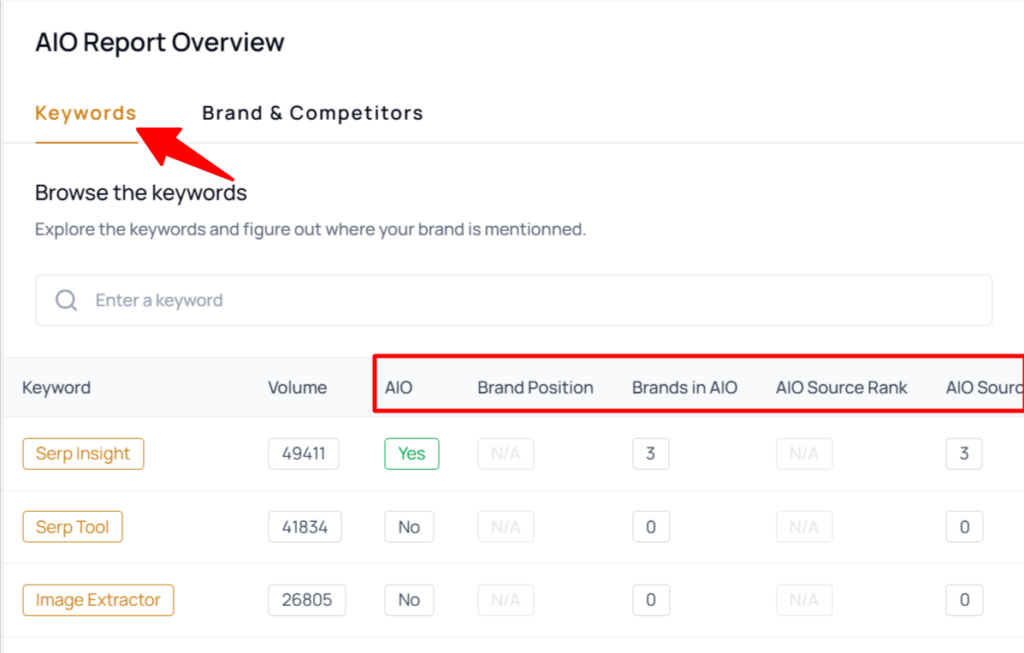
Below the summary cards, every keyword in your report gets its own row of data. The columns you should focus on for competitor analysis are:
- Brand Position shows the order in which your brand appears inside the AI Overview text. Appearing first signals stronger topical authority. Appearing third or fourth means competitors are framing the narrative before your brand enters the conversation.
- Brands in AIO tell you how many brands Google cites alongside yours. A high number means Google treats the topic as multi-source, which gives you more opportunities to appear. A low number means Google is concentrating authority on one or two dominant brands, and breaking into that list requires stronger content signals.
- AIO Source Rank shows your domain’s position among the URLs Google cites as sources. Your content can earn a source citation without your brand appearing in the summary text, and that gap is a direct optimization signal.
Step 4: Use Filters to Show Competitor Gaps
Instead of reviewing every keyword row manually, apply thruuu’s built-in filters to isolate the highest-impact opportunities:
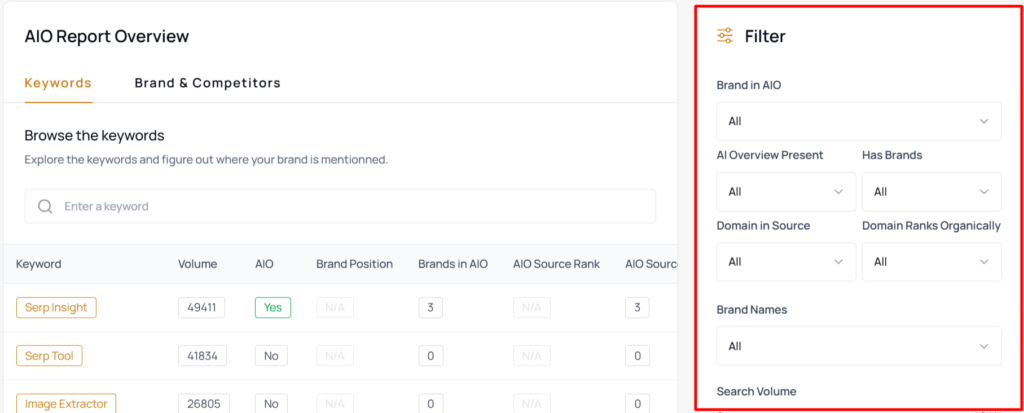
For instance, to find low-hanging fruit, combine the Search Volume filter with Your Organic Ranking to isolate keywords where you already rank in the top 10 organically, but your brand does not appear in the AI Overview.
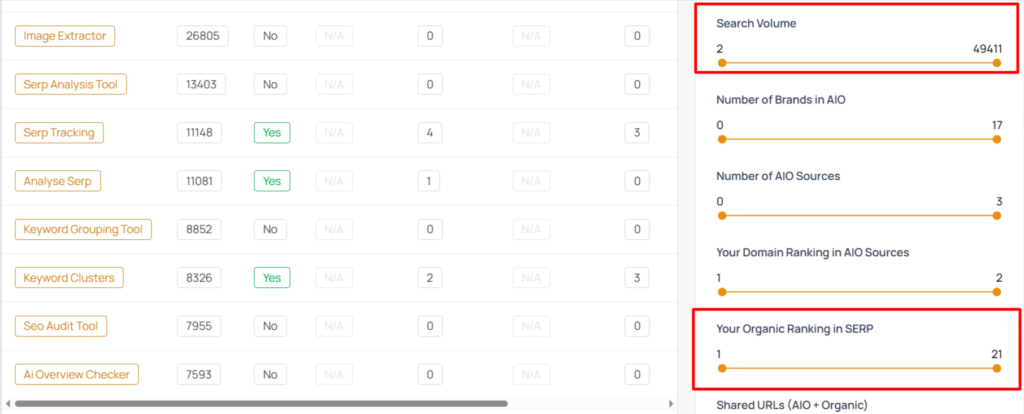
These keywords deserve the first round of optimization because you have already established enough authority for Google to rank your page.
Step 5: Click Into a Keyword for a Full Competitor Breakdown
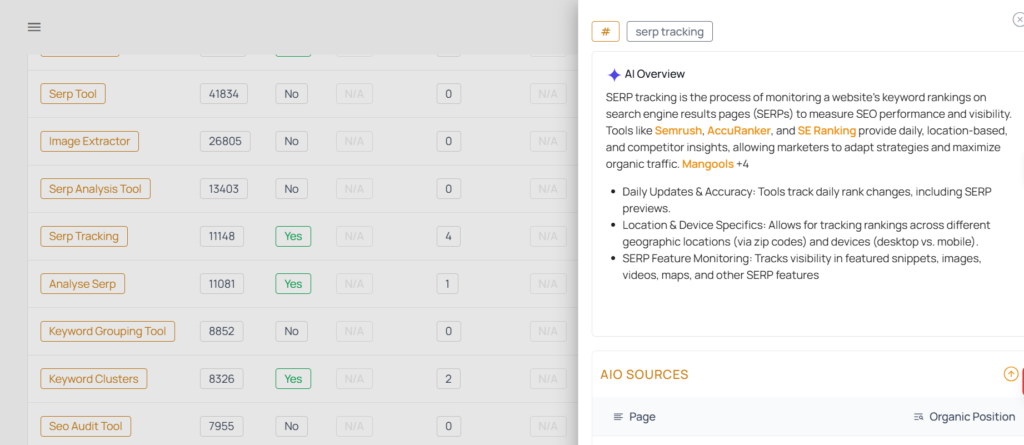
Click any keyword row to open a detailed side panel. Inside, you get:
- The full AI-generated summary text, so you can read exactly how Google frames the topic and which brands it positions as authorities.
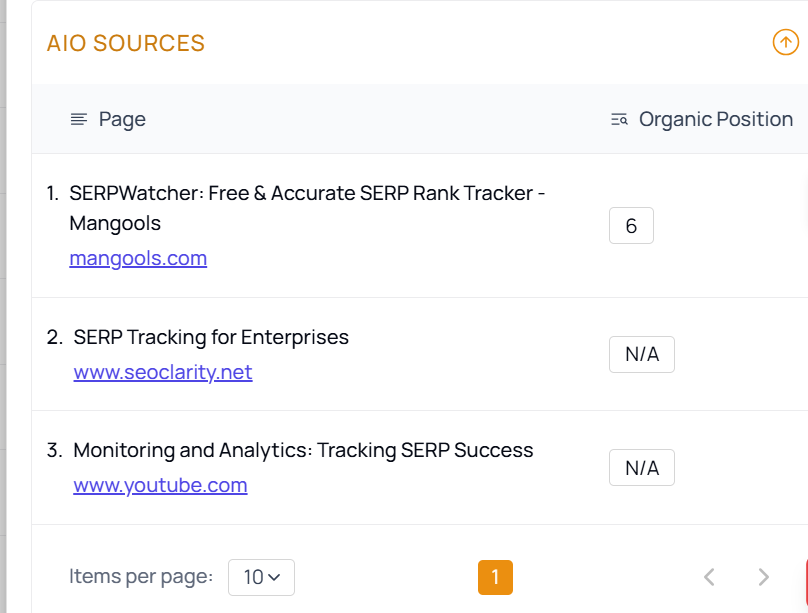
- The complete list of source URLs, including the domain, page title, and the position each source holds in the citation list. If a competitor’s page consistently appears as Source 1 across multiple keywords, it sets the standard for what Google considers authoritative on that topic.
- Brands mentioned in the AI content, so you can see which competitor names Google surfaces and how often each brand appears across the summary.
- Key themes and concepts covered in the AI Overview, which shows you the subtopics and angles Google pulls from cited sources. If your content does not address those themes explicitly, you are giving competitors a structural advantage.
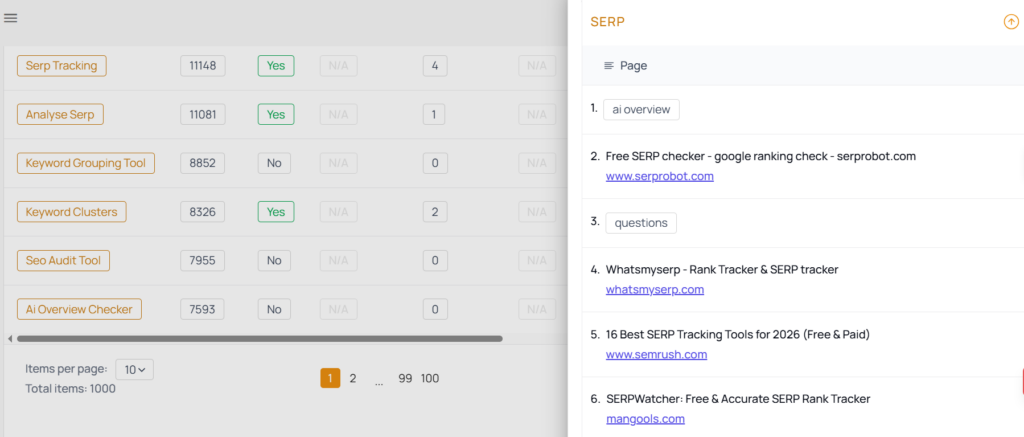
- A side-by-side comparison with the top 10 organic results, so you can see whether the pages Google cites as AI sources are the same pages ranking organically, or whether AI and organic rankings are pulling from different content entirely.
Step 6: Analyze the Brand and Competitor Section
Go to the Brand and Competitor tab within your report. This section aggregates competitor data across your entire keyword set, not just individual keywords.
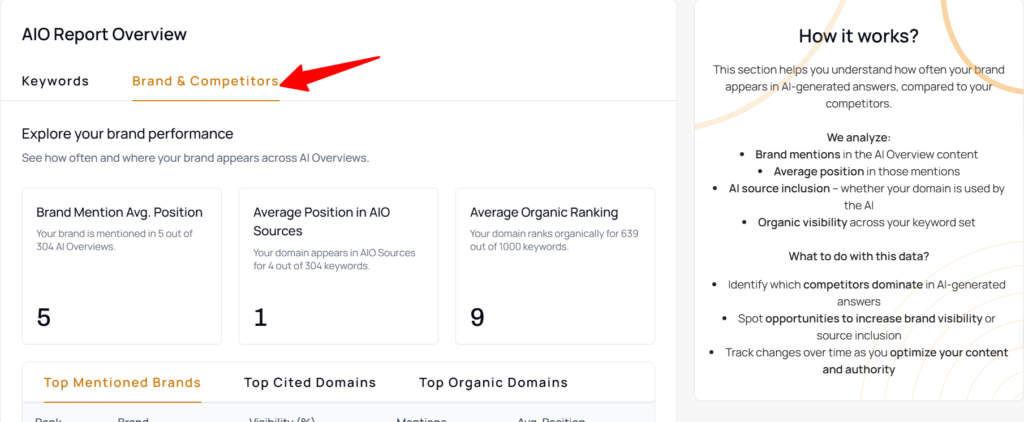
Most Mentioned Brands ranks every brand by total AI Overview mentions across your tracked keywords.
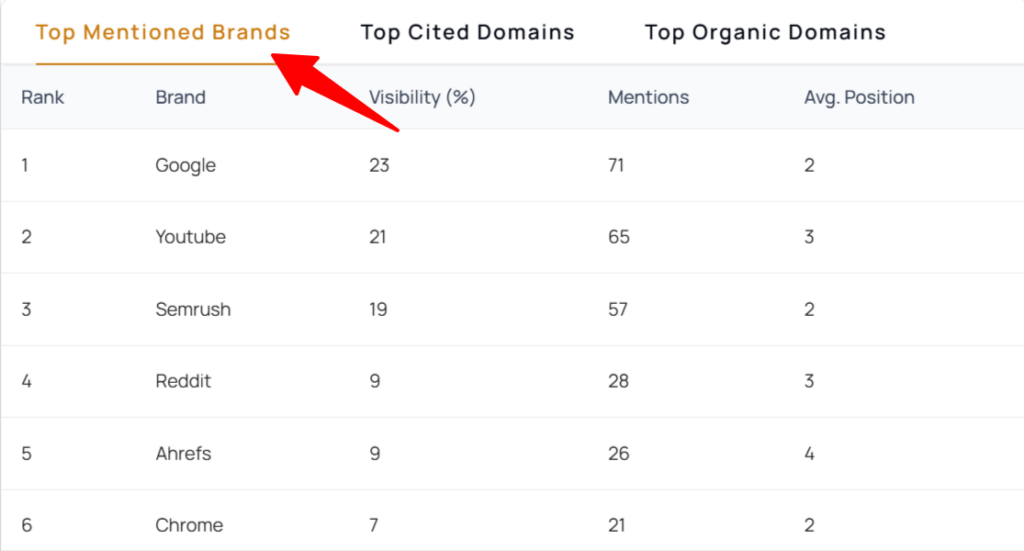
This table shows you who dominates the AI narrative in your niche, how often each competitor appears, and what percentage of relevant AI Overviews include their brand name.
Top Cited Domains ranks every domain by how often Google cites it as an AI Overview source.
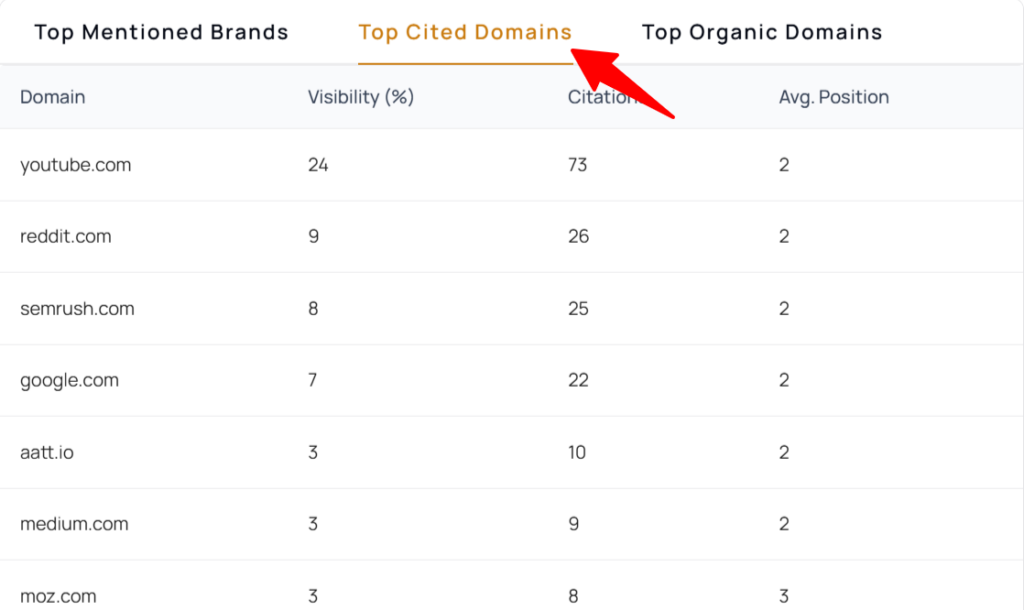
A competitor appearing here frequently means Google consistently treats their content as sufficiently authoritative to draw on when generating AI answers.
Comparing all three metrics reveals whether your organic authority is translating into AI visibility, or whether competitors are outperforming you specifically in the AI layer despite lower organic rankings.
Step 7: Identify Visibility Gap Keywords and Build Your Action List
The most actionable insight thruuu provides for competitor analysis is the visibility gap: keywords where your domain appears as an AI Overview source or ranks in the top 10 organically, but your brand name does not appear in the AI-generated summary text.
To close this gap, open the keyword-level detail panel for each affected keyword, read the full AI Overview, and identify how competitors who are mentioned by name structure their content.
Also, check whether your brand appears clearly in your page title, H1, intro paragraph, and structured data. In many cases, the fix is less about creating new content and more about making your brand identity explicit and early within existing pages that Google already trusts.
What Users Say
“thruuu transformed our ability to deliver GEO and SEO services at scale. What used to take our team days of manual analysis now takes hours, and the AI-optimization insights we’re getting are directly translating into featured snippets and AI citations for our clients. It’s one of our secret weapons in the recipe for winning in AI search.” John McKusick, NextLeft CEO.
A Redditor also shared, “thruuu isn’t a rank tracker in the traditional sense, but it’s great for AI Overview SEO rank tracking from a content and structure angle. It helps identify what types of formats tend to show up in AI answers more often.”
Pricing
Each AIO report costs 50 credits per 1,000 keywords. The Agency plan includes 700 credits per month, enough to monitor 14,000 keywords.
Start a free trial to see competitors’ ranking in your keywords’ AI Overviews.
Semrush AI Overviews Visibility Checker
Best for: Teams already using Semrush that want Google AI Overview competitor monitoring without adding another platform.
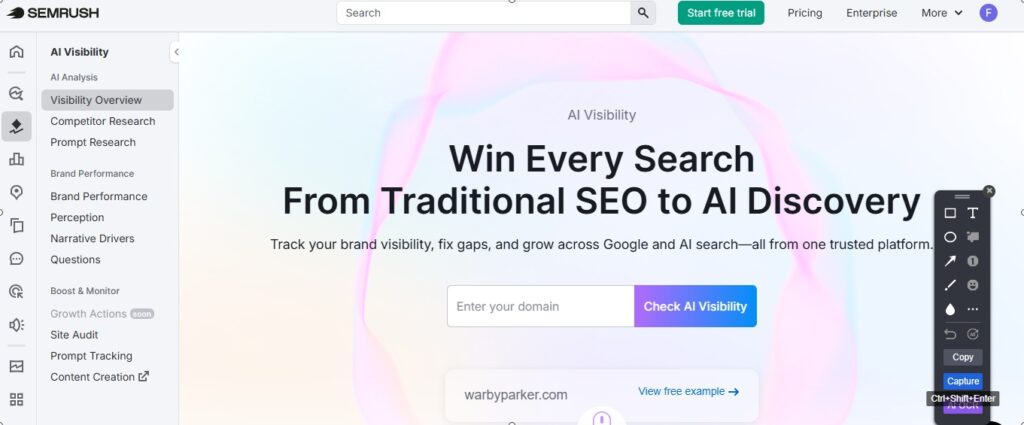
Semrush’s AI Overviews Visibility Checker provides a report on how often your brand appears in AI-generated answers.
The tool features an AI visibility score, brand mentions, and cited pages, helping you understand where AI Overviews cite your competitors across your target keywords.
The baseline AI visibility score measures your overall presence in AI-generated answers.
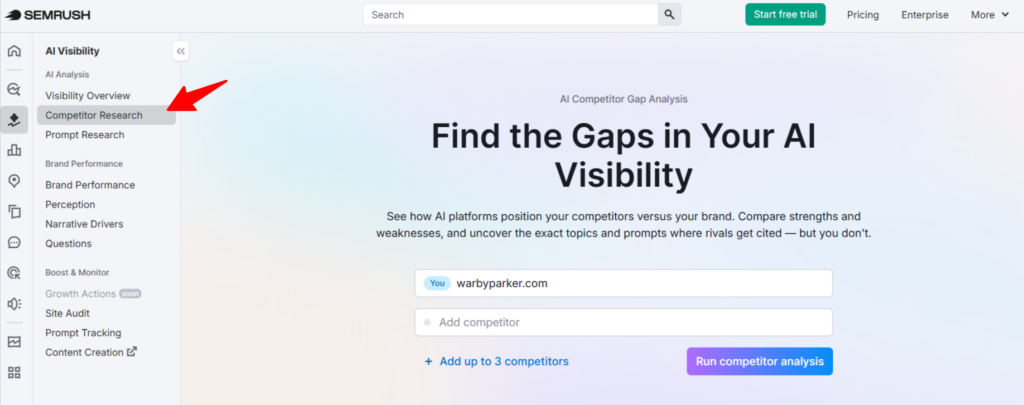
From there, the “Competitor Research” section shows which brands are cited more frequently, the topics they appear for, and the types of answers where they are referenced instead of your content. This data makes it easier to identify competitors winning visibility in Google AI Overviews.
Semrush also supports AI Overview competitor analysis through its Position Tracking tool. By adding target keywords and enabling the SERP features filter, you can isolate queries that trigger AI Overviews and see whether their domain or competitors appear in those summaries.
Additional competitor insights come from Organic Research and Domain Overview. These reports show which keywords trigger AI Overviews for a domain, the percentage of keywords associated with AI-generated summaries, and whether those summaries link back to competitor pages.
Together, these views help teams understand where competitors are gaining AI citations.
Who this Tool Isn’t Best for
- Small creators or teams with limited budgets
- Brands with very niche or low-volume visibility in AI-generated answers
- Teams wanting a purpose-built Google AI Overview tracking experience
What Users Say
“Semrush’s AI Visibility toolkit is helpful directionally, but the data isn’t fully precise. It’s modeled from clickstream, so it’s good for trends, not exact query-level accuracy.” A Redditor
Pricing
Ahrefs Brand Radar
Best for: Brands and agencies that need competitor benchmarking across Google AI Overviews, ChatGPT, Perplexity, Gemini, and Microsoft Copilot in a single dashboard.
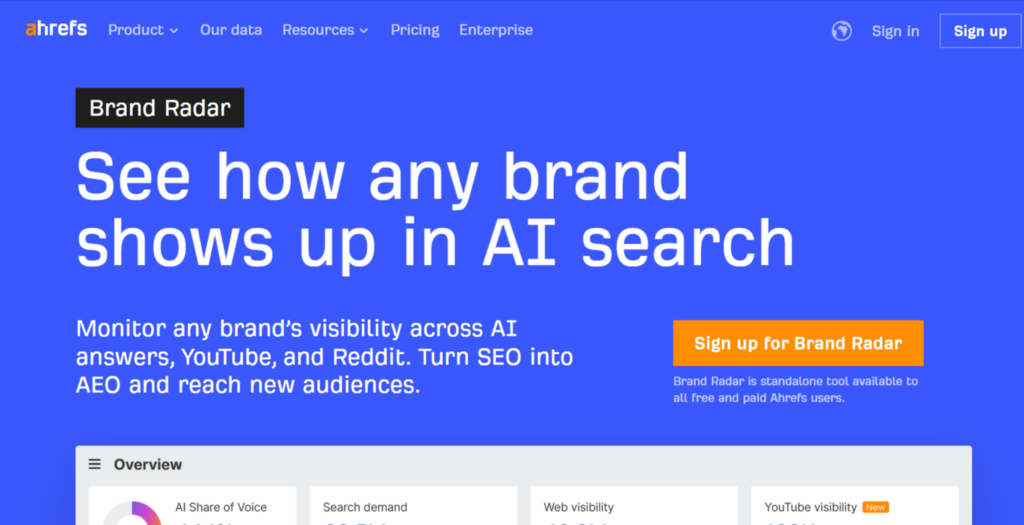
Ahrefs Brand Radar tracks your brand’s visibility across Google AI Overviews, AI Mode, ChatGPT, Gemini, Perplexity, and Microsoft Copilot from a single dashboard. Its database draws on over 351 million monthly search-backed prompts, meaning the prompts it monitors reflect what real users type into Google, not synthetic queries built in a lab.
You can research any brand without setting up a project first, which makes competitor analysis immediate rather than something you schedule and wait for.
The AI Share of Voice metric shows you what percentage of AI-generated answers mention your brand versus competitors. You can cluster those prompts by topic to identify exactly which content categories competitors own in AI answers and which ones remain open.
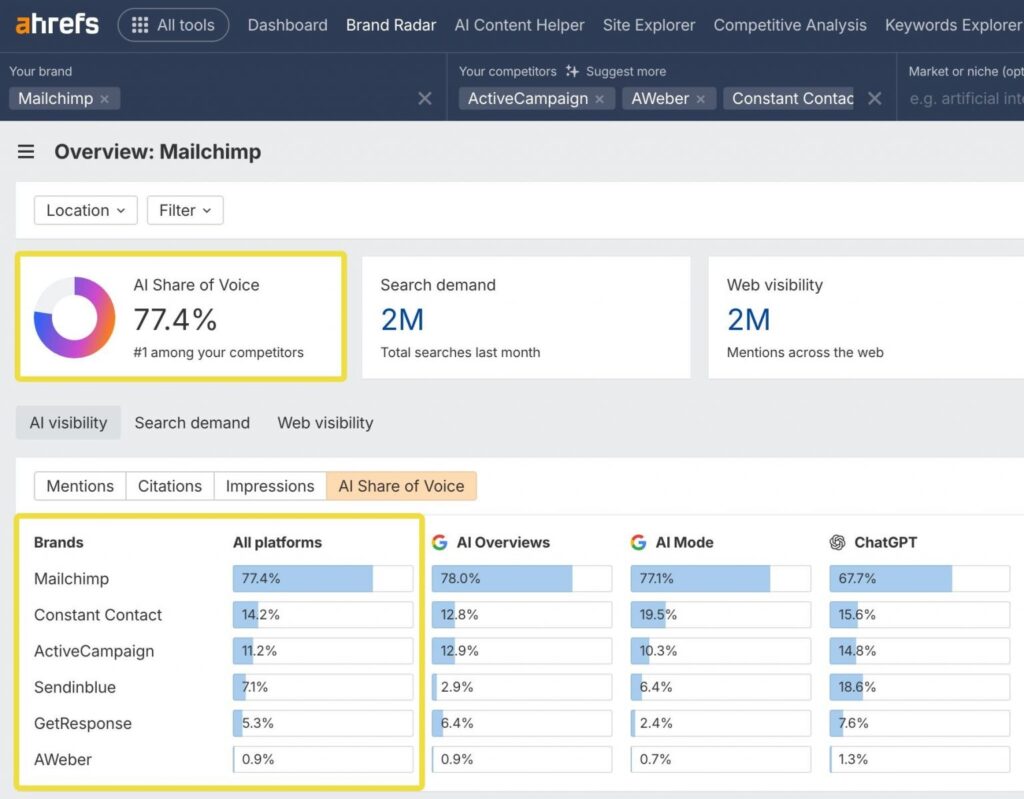
To analyze a competitor, type their domain into Brand Radar and select Google AI Overviews as your platform. The tool returns their Share of Voice score, the specific prompts in which they appear, and the source URLs that Google cites when generating those answers.
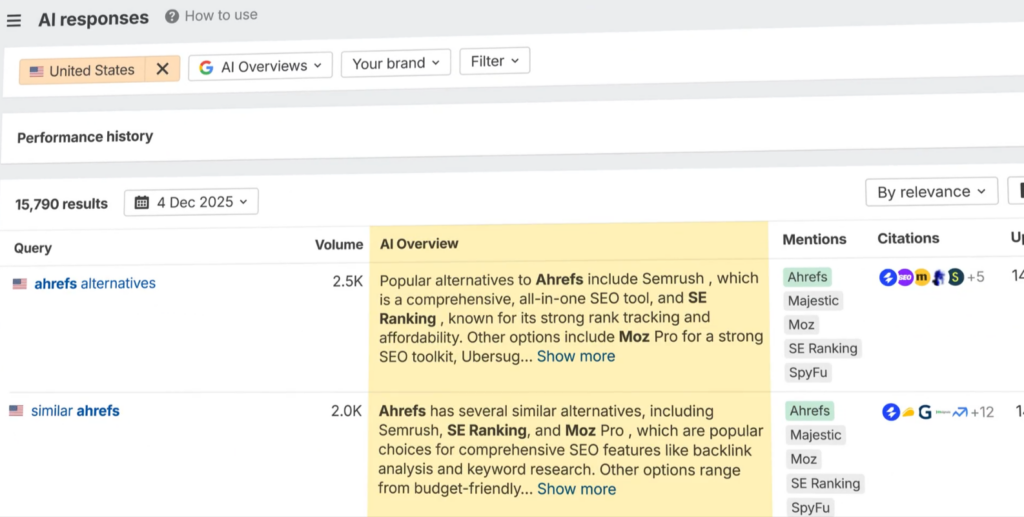
You can cross-reference that source list against your own content to identify pages where competitors earn AI citations that your content currently does not.
That said, Brand Radar tells you who wins in AI answers more than it tells you why. You see which competitor domains Google cites, but the tool does not break down the on-page structure, topic coverage, or content depth behind those citations. If your goal is to reverse-engineer exactly what a competitor’s page does to earn an AI mention, you will need a separate content analysis tool alongside it.
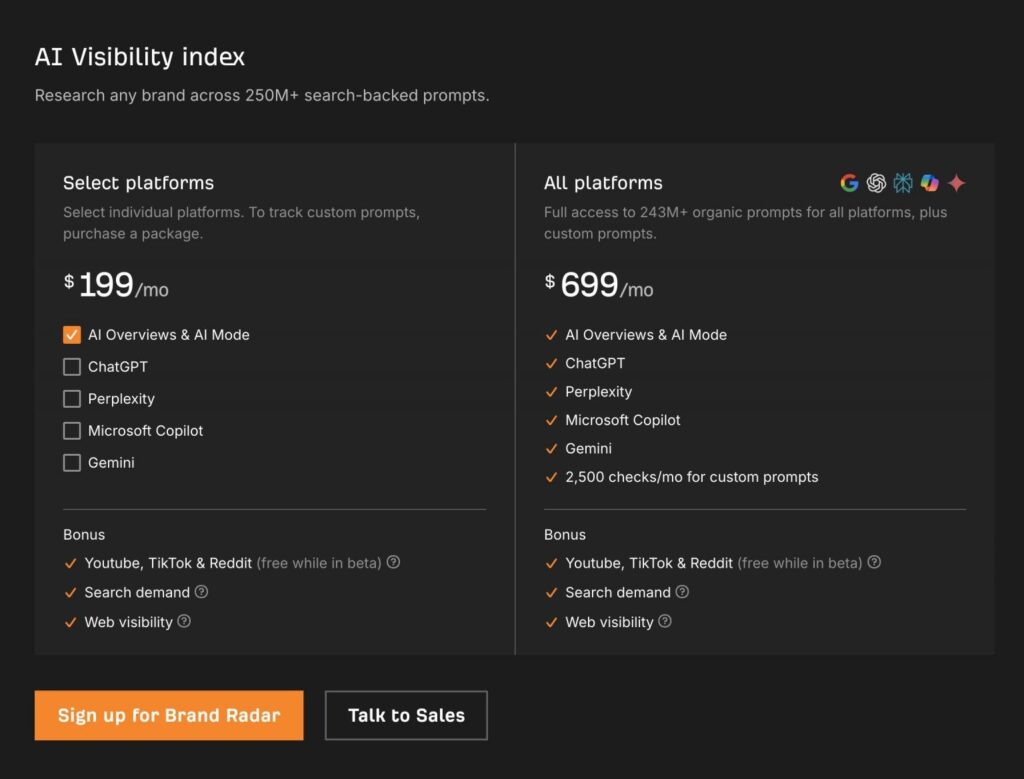
The pricing also reflects its enterprise positioning, starting at $199 per month for AI Overviews and AI mode tracking. This pricing limitation puts it out of range for smaller SEO operations focused purely on Google AI Overviews.
Brand Radar is not the best for
- Solo SEOs and small businesses: The entry price of $199 per month makes it a difficult investment to justify when your competitor monitoring needs are limited to Google AI Overviews alone.
- Content strategists who need actionable optimization guidance: Brand Radar shows you which competitors appear in AI answers, but does not tell you how to structure or rewrite your content to compete for those same citations.
What Users Say
“One aspect I find less appealing about Ahrefs is its pricing, which tends to be on the higher side for individuals, freelancers, or small businesses. Some features can also be challenging for beginners, as there is a noticeable learning curve.” Mohd Saif K., SEO Executive
“Brand Radar provides hands down one of the easiest and most comprehensive ways to understand what plays a role in AI answers: from brand and topics inclusions and gap analysis at scale, to easy citation identification for any topic, vertical in any model.” Aleyda Solis
Pricing
Visit Ahrefs Brand Radar starts at $199 per month and can only be purchased monthly
seoClarity (Clarity ArcAI)
Best for: Enterprise SEO teams that manage high keyword volumes and need large-scale competitor measurement in Google AI Overviews.
seoClarity is an enterprise-grade platform built around its Clarity ArcAI product, which provides large-scale tracking of AI Overviews and competitor visibility.
It helps teams identify where their brand appears in AI-generated answers, which competitors are cited instead, and how AI responses change over time.
For each tracked keyword, the platform shows which queries trigger AI Overviews, whether your brand is mentioned or cited, and which competitors are referenced in the same summaries. This makes it possible to identify where rivals are gaining AI citations.
ArcAI also captures the full AI Overview response and tracks how it changes, including shifts in cited sources. This helps teams monitor when competitors replace their content or when new domains begin appearing in AI-generated answers.
One of seoClarity’s strengths is scale. The platform can track thousands of keywords at once and generate competitor-level reports showing which domains are most frequently cited across AI Overviews. This makes it useful for large organizations running SEO programs across multiple markets, languages, or product categories.
The platform also includes sentiment monitoring within AI-generated results and accuracy tracking to detect misleading or hallucinated information about your brand. In addition, bot activity tracking helps teams understand how AI crawlers access their pages and whether technical issues may affect inclusion in AI summaries.
seoClarity is designed for enterprise workflows, and that scope comes with complexity. The platform requires onboarding and configuration before teams can fully use the AI Overview tracking features. For smaller teams focused solely on lightweight competitor monitoring, setup and pricing can be barriers.
SeoClarity Isn’t Best For
- Small teams or individual creators with limited budgets
- Teams that only need lightweight, Google‑focused AI‑Overview tracking without full‑stack AI analytics.
- Organizations that prefer self‑serve tools and are unwilling to dedicate internal resources to onboarding and maintenance.
What Users Say
“seoClarity helps me be a better SEO and provide more value to my organization. Its robust features and expansive functionality help me save time and get more done. The new ArcAI tool to measure AEO / answer engine optimization / AI search has saved me a ton of time and made it much easier to track and report on results to stakeholders.” Verified G2 user
“Sometimes the data exports require a bit of manipulation to get them to be useful. The advanced features need a lot of fine-tuning to be genuinely useful. The UI on Arch AI has improved significantly, but the overall UI needs updating. I believe this is coming.” Ash N.
Pricing
Custom enterprise pricing. Visit seoClarity to request a demo and pricing tailored to your keyword volume and usage.
SE Ranking
Best for: Small‑ to mid‑sized teams that want affordable AI Overview monitoring across Google and Perplexity without committing to an enterprise platform.
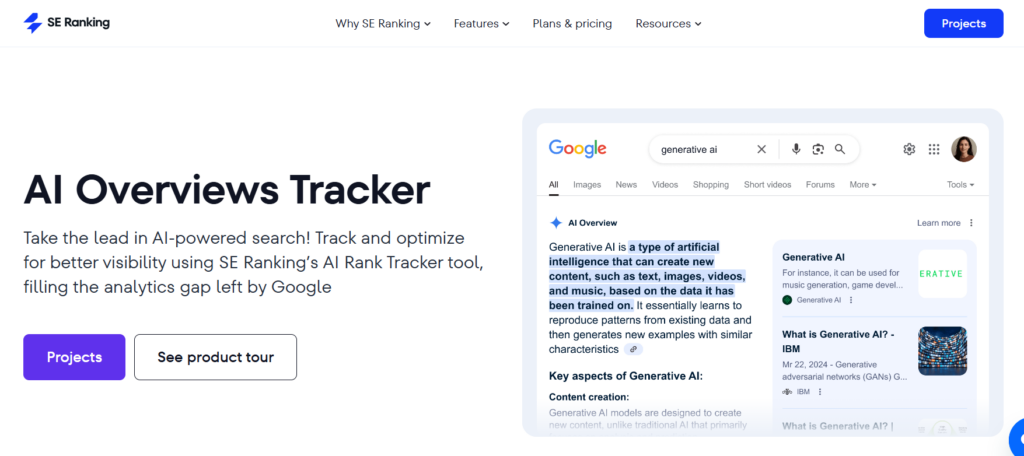
SE Ranking is a mid‑tier option if you need AI‑search visibility but don’t want the price or complexity of enterprise suites.
The platform tracks Google AI Overviews, AI Mode, and Perplexity (and, in some tiers, ChatGPT and Gemini), providing multi‑engine coverage at a lower cost than many dedicated AIO tools.
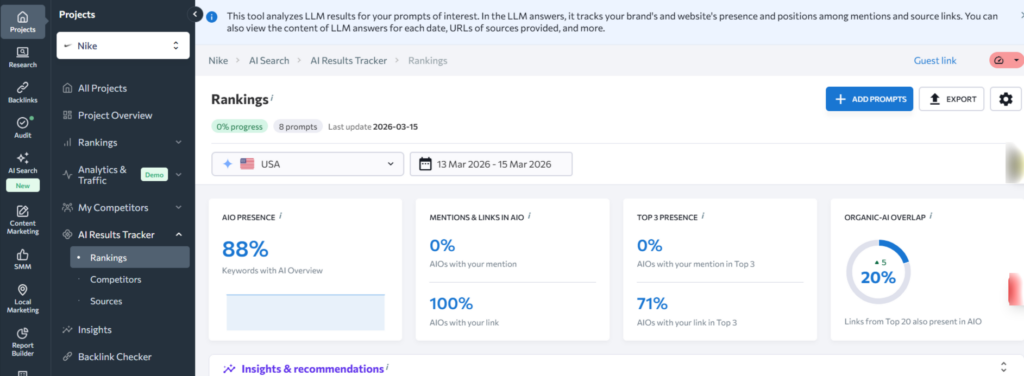
SE Ranking’s AI Results Tracker is organized into three main views: Rankings, Competitors, and Sources.
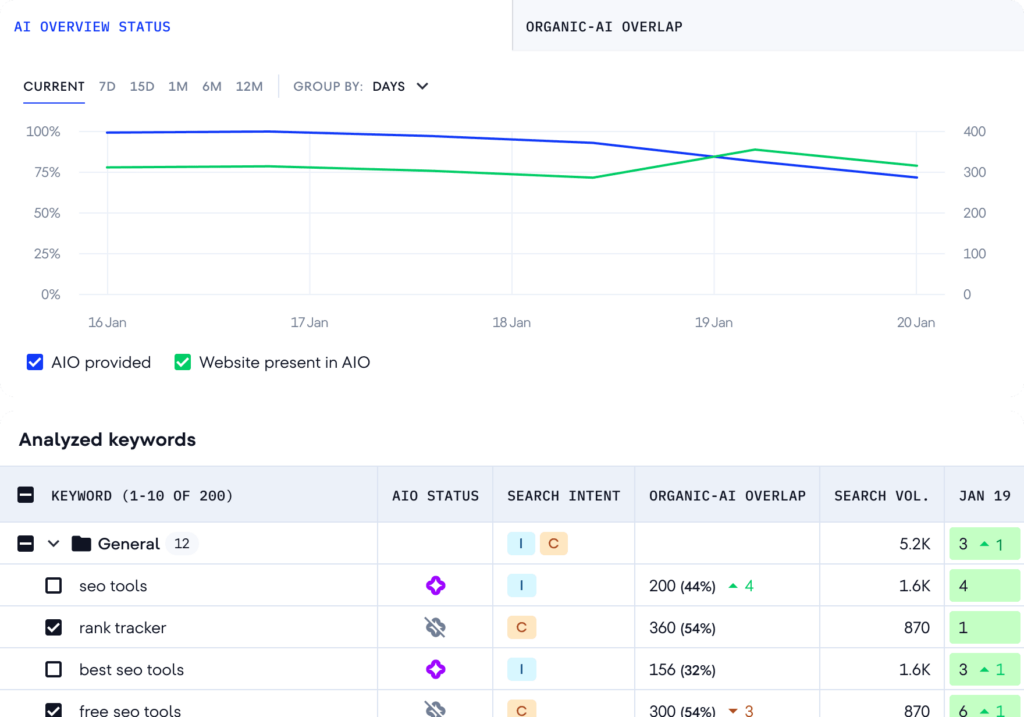
The Rankings tab shows how often your brand appears in AI answers and how that visibility changes over time.
The Competitors tab provides a side-by-side comparison of how AI answers mention your brand versus competitors for the same prompts.
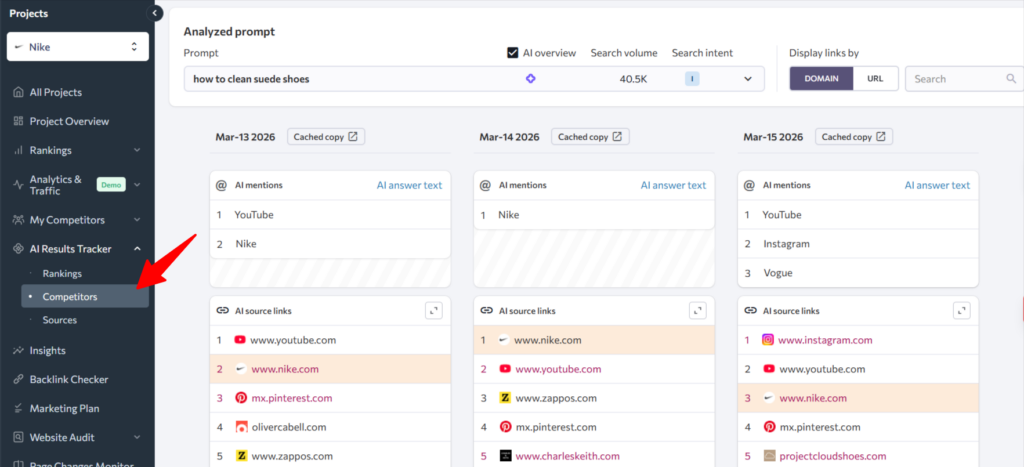
The Sources tab highlights which pages and domains AI answers rely on most, making it easier to identify content-gap opportunities.
The platform also shows metrics for mentions and link shares to quantify AI visibility. These include mention presence (how often your brand appears in answers), top-3 presence (how often you appear among the top citations), and source link presence (how frequently AI answers include links at all).
SE Ranking also caches AI answers and stores historical data, allowing you to track how responses evolve and spot shifts in how your brand is represented.
SERanking Isn’t Best For
- Teams that need enterprise‑scale AI‑search analytics (very high‑volume, multi‑country, multi‑language programs).
- Agencies or brands that want deep optimization workflows (e.g., AI‑search‑specific content frameworks, attribution modeling, or sentiment‑driven AI risk management) beyond simple monitoring.
Pricing
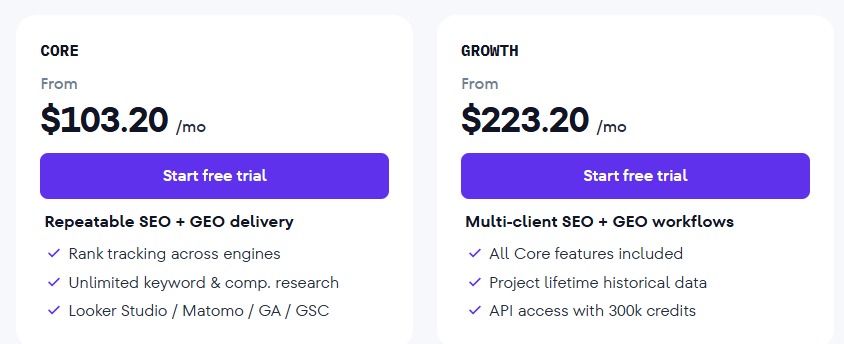
Both plans start with a 14-day free trial (no credit card required) and include AI tracking, rank monitoring, audits, integrations, and competitor research.
What Users Say
“I was a bit disappointed about how limited some AI insights still feel. The AI tracking is useful, but I would still like clearer explanations and recommendations about what action I should take next. Sometimes I see the data, but I still have to figure out the meaning on my own.” Opeyemi O.
“If you just want visibility into AI overviews, SEO Ranking does a decent job showing when your keywords trigger and if your site is cited.” Russell Scott
FAQs on AI Overviews Competitor Analysis
What does competitor analysis in AI Overviews mean?
Competitor analysis in AI Overviews means identifying which brands are cited in AI answers, which pages are used as sources, how often competitors appear, and what content structure AI prefers.
This helps you understand why competitors are referenced and what changes could improve your chances of inclusion.
What metrics should I track for AI Overview competitor analysis?
Track AI visibility scores, citation or mention frequency, share of voice compared with competitors, and competitor citations.
It’s also important to distinguish between brand mentions and linked sources. These metrics show not just whether AI Overviews appear, but which competitors are consistently winning them.
How often should I monitor competitors in AI Overviews?
AI Overviews change frequently as Google updates citations based on content quality, freshness, and query context.
Weekly monitoring is a practical baseline, especially during active content campaigns.
Monthly checks may be sufficient for general tracking, but more frequent monitoring is useful after publishing new content targeting competitive keywords.
How do I check competitor visibility in AI Overviews?
Most tools follow a similar workflow. You add keywords or prompts, detect which queries trigger AI Overviews, identify cited competitor domains, and compare mentions versus citations.
From there, you analyze gaps where competitors appear, but your brand does not. This makes it easier to adjust your content structure and improve inclusion in AI-generated summaries.
Is there an affordable option for small teams?
SE Ranking and thruuu are generally more accessible for smaller teams. They provide AI Overview detection, competitor citation tracking, and keyword-level insights without requiring enterprise pricing.
Empower Your Content Team
Our end-to-end content optimization solution empowers your team to crack the Google algorithm, craft exceptional content, and achieve remarkable organic search results.