

Your writer missed the mark. Again.
The draft is off-brand. The angle is wrong. The page is buried on page two.
So you revise it. You give feedback, and then the next draft comes back, and it’s still not right.
The problem isn’t your writer. It’s your content marketing brief.
Most content marketing briefs are too vague. They list a keyword, a word count, and maybe a few headings. That’s not enough information for your writer to produce content that ranks and converts.
This guide shows you exactly how to create a great content marketing brief.
You get a step-by-step process, real examples, and free templates you can use today.
Table of Contents
Why Do You Need a Content Marketing Brief?
A content team without a content marketing brief is like a sojourner without a compass; it loses direction, intent, and impact.
For your content team, the brief isn’t just a writing aid but also a coordination tool.
It translates strategy into execution by moving critical information like search intent, audience profile, heading structure, keyword targets, and Slack threads into a document every team member can reference.
Here’s essential benefits of a content marketing brief:
Minimizes Miscommunication
A brief provides clear direction before writing starts. It removes the ambiguity that triggers revision requests.
When your writer knows the audience, the intent, and the scope from day one, the first draft lands closer to the mark.
No brief means every writer fills the gap with their own assumptions, and at scale, that produces inconsistent output.
Saving Time and Resources
One of the biggest time drains in content marketing is excessive revision cycles, and a well-structured brief reduces that. When you define structure, tone, and keyword targets up front, your writers don’t need to guess, and editors don’t need to correct foundational decisions mid-draft.
The detailed content brief we share with our writer at thruuu (see some content briefs examples here) eliminates the back-and-forth that happens when direction is unclear.
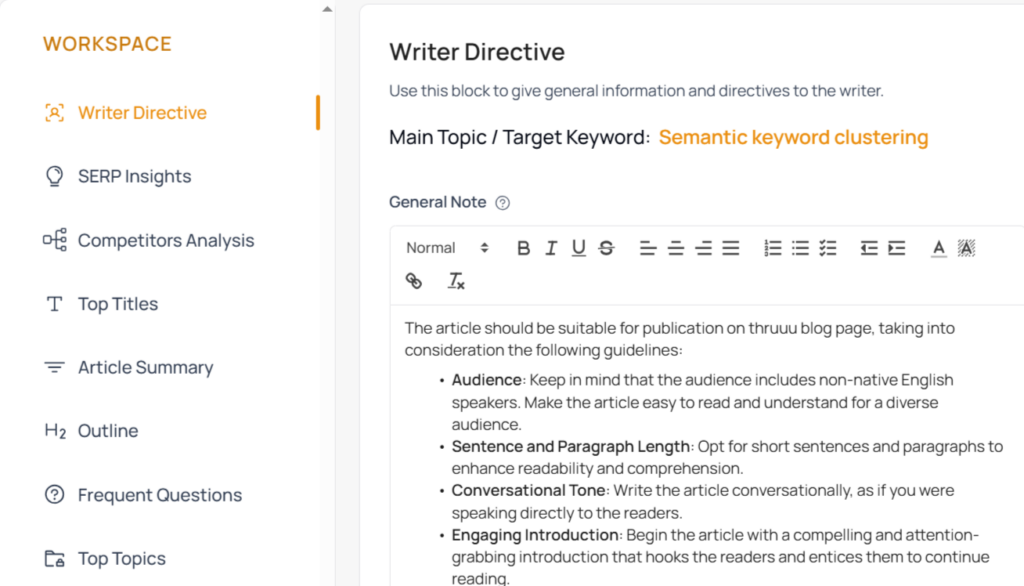
We’ve had an over 80% success rate in delivery from our writer and have created more high-quality content in less time.
Start a free trial to see how thruuu creates top-notch content briefs that give writers clear direction and unique angles.
Aligning Content with Brand Strategy
Every piece of content carries your brand’s voice and credibility.
Without a brief, individual writers make individual choices about tone, positioning, and key messages.
A brief lock in the strategic layer: what the brand stands for, how it speaks, and what it wants the reader to do next.
That consistency is what builds topical authority over time and ensures your content library reads as a coherent body of work rather than a collection of one-off pieces.
Key Elements of an Effective Content Marketing Brief
An effective content marketing brief contains everything a writer needs to produce a strong first draft without asking follow-up questions.
Here are the sections a content marketing brief should include:
Project Overview and Objectives
Every brief starts with a clear statement of what the content should achieve. Is the goal to rank for a specific keyword, generate leads, or build topical authority?
Goals shape every other decision in the brief.
A blog post designed to convert readers into trial users has different requirements from one designed to educate an existing audience.
State the goal first, and the rest of the brief follows logically.
Target Audience Insights
Target audience insights tell the writer who they’re addressing, their role, expertise level, primary concerns, and what they already know.
For example, “content marketers” is too broad. “Mid-senior content marketers at B2B companies, navigating the shift from traditional SEO to AI-powered search” gives the writer a clear picture.
Audience specificity affects vocabulary, depth, and tone, making the content more compelling.
Content Type and Format Guidelines
Format shapes how you write your content.
A listicle, a how-to guide, a comparison page, and a thought leadership piece follow different structural logics. Specify the format and content type in the brief.
If you want H2s structured as questions, say so. If the piece needs a comparison table or a numbered process, include that instruction.
Writers produce better output when they know the expected shape before they start.
Content Outline
The content outline is an important structural element of the brief. It contains the full heading hierarchy H2s, H3s, and H4s, along with writer notes for each section.
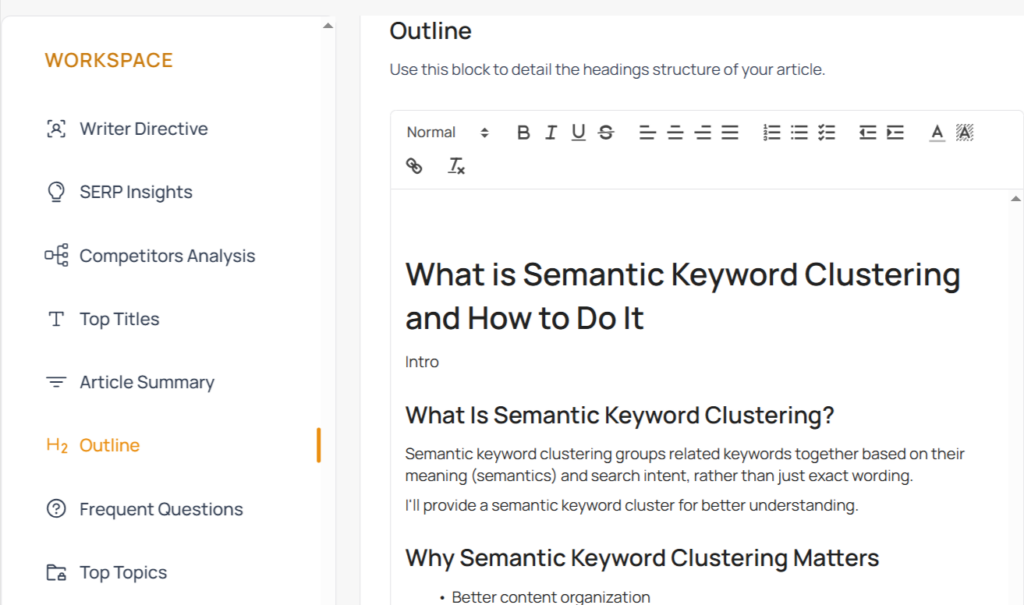
Strong outlines are built on SERP analysis and audience research.
thruuu’s SERP analysis tool shows the heading structures of the top 100 ranking pages for any keyword, so you can build an outline grounded in what’s actually working in search.
SEO and Keyword Strategy
The SEO section covers the primary keyword, secondary keywords, and topics to include. It also specifies the meta title and meta description, so that your writers don’t make optimization decisions in isolation.
Note: An seo content brief goes beyond keywords. It includes search-intent analysis, word-count targets based on competitor benchmarks, and topic coverage derived from what top-ranking pages actually address.
thruuu’s content brief tool generates these sections automatically from SERP data, grounding the keyword strategy in what searchers are looking for rather than what tools suggest in isolation.
Distribution and Promotion Plan
How content gets distributed should influence how it gets written. A piece designed for LinkedIn repurposing needs different hooks than one designed purely for organic search.
Include the distribution channels in the brief. If the content will go out via email, note the subject line angle. If it will run as a social post, flag the format constraints.
Writers who understand the full lifecycle of a piece make better decisions at the sentence level.
Best Practices for Creating Content Marketing Briefs
Here’s how to approach creating your content marketing briefs systematically.
We’ll use thruuu’s content brief tool as the example throughout and add the public brief at the end of this section.
For a full walkthrough, see thruuu’s guide to creating content briefs.
Start with Competitor Analysis
A brief is a research document before it’s a writing document. The starting point is understanding what’s already working for your target keyword.
Here, you will understand the content format used by ranking pages, the sub-topics (questions) readers want answers to, competitors’ angles of content delivery, and identify idea gaps in competitors’ pages.
We don’t think it’s fun to juggle tens of open Chrome tabs, all in the name of competitor analysis.
thruuu automatically fetches SERP data and pre-fills your brief with competitive insights: heading structures from top-ranking pages, word count benchmarks, frequently covered topics, and People Also Ask questions.
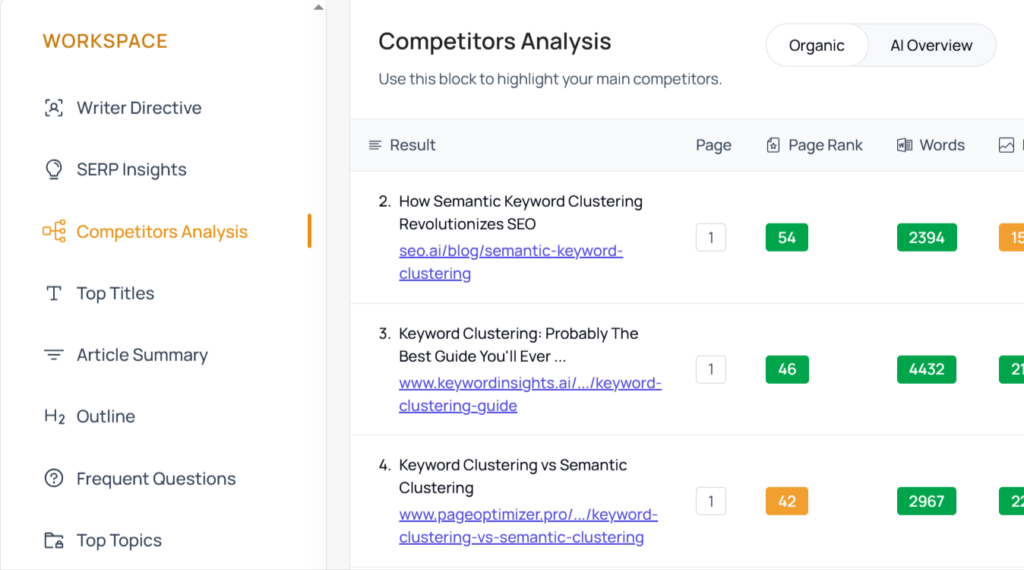
That’s hours of research you’ll never do again.
Perform Search Intent Analysis
Understanding why someone searches for a query is as important as knowing what they search for. A brief that misidentifies search intent produces content that answers the wrong question.
thruuu includes a search-intent element that reads the top-ranking pages and summarizes the audience’s underlying need: what the reader is trying to accomplish and which content format best serves that goal.
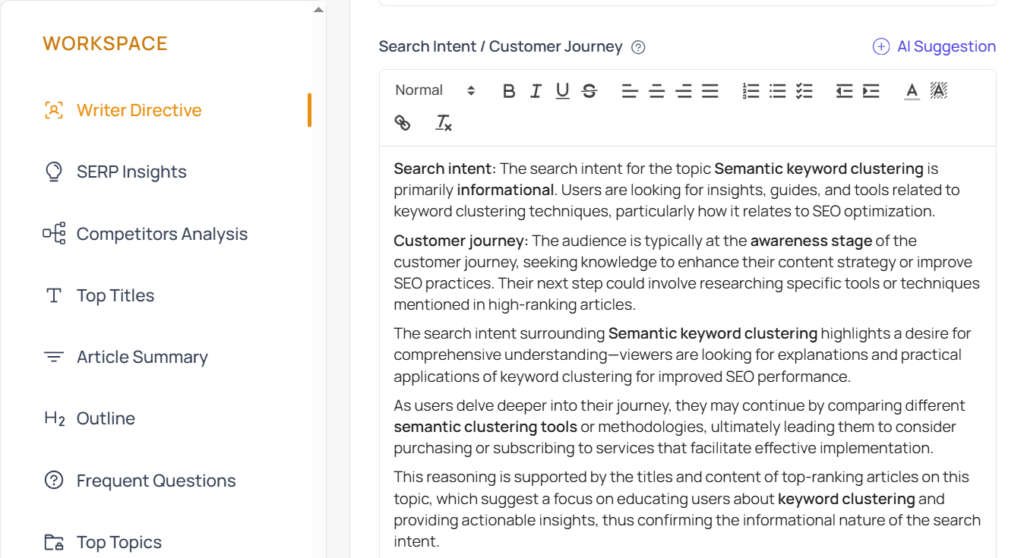
When you understand your topic’s search intent before creating the content, you’ll create content that satisfies the searcher, not just the keyword.
Create A Comprehensive Content Outline with Notes
Your writer needs to know what to cover in each section of the article, what angle to take, and which sources to reference. Without that, they guess, and that produces rewrites.
Build an outline with section-level notes.
Each heading should tell your writer the unique concept to cover and how to do it, not just what topic to introduce. You can add examples, personal experiences, strong opinions, customer insights, or real data relevant to the section.
thruuu generates outlines from the SERP competitors’ data and its custom AI. That’s a framework to build upon.
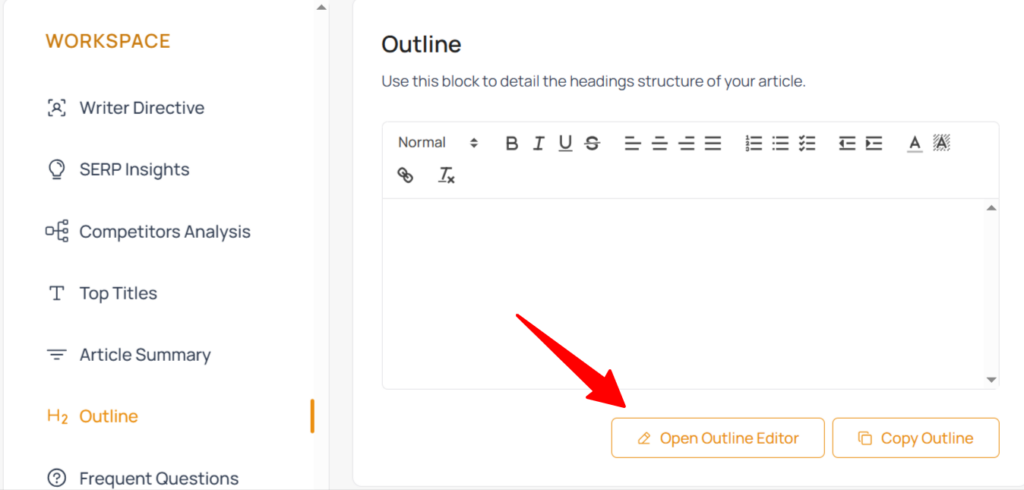
On the right, you will see a rich text editor with your outline structure, and on the left, a bird’s-eye view of your competitors’ outlines and an AI outline generator.
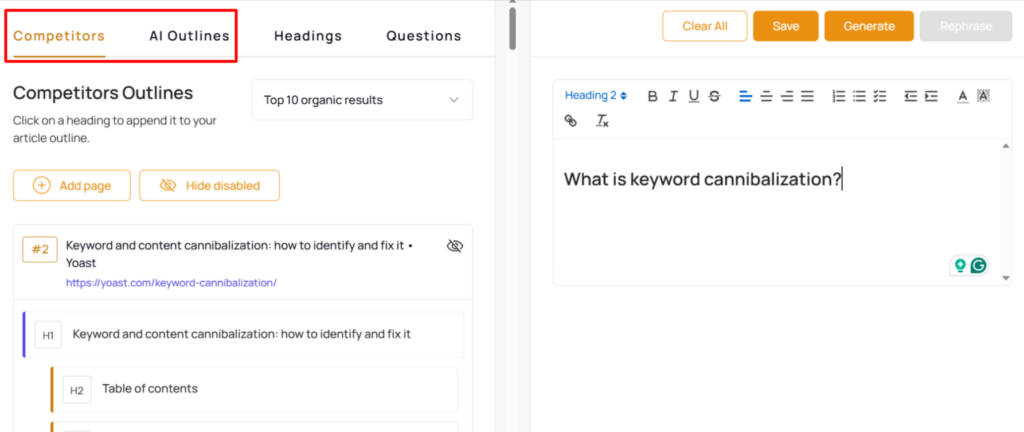
Analyze the competitors’ outlines, then click on different sections to add them to your outline. You can also use the AI generator to create an outline and add to your outline section.
Include SEO and GEO Elements
Your brief needs to serve two masters now.
The first is Google. The second is AI. Ranking on Google gets you organic traffic. Getting cited by ChatGPT, Perplexity, and Google AI Overviews gets you something newer and increasingly more valuable.
These are two different games. Most briefs only play one.
SEO targets ranking. GEO targets citation. Your GEO brief needs to prioritize both before writing starts.
For SEO, your brief should include the topics, questions, and keywords that top-ranking pages already cover. For GEO, it should flag the structural patterns AI models look for: clear definitions, entity-rich content, and insights front-loaded in each section.
In thruuu, this happens automatically. The content brief tool pulls topics and questions directly from SERP data.
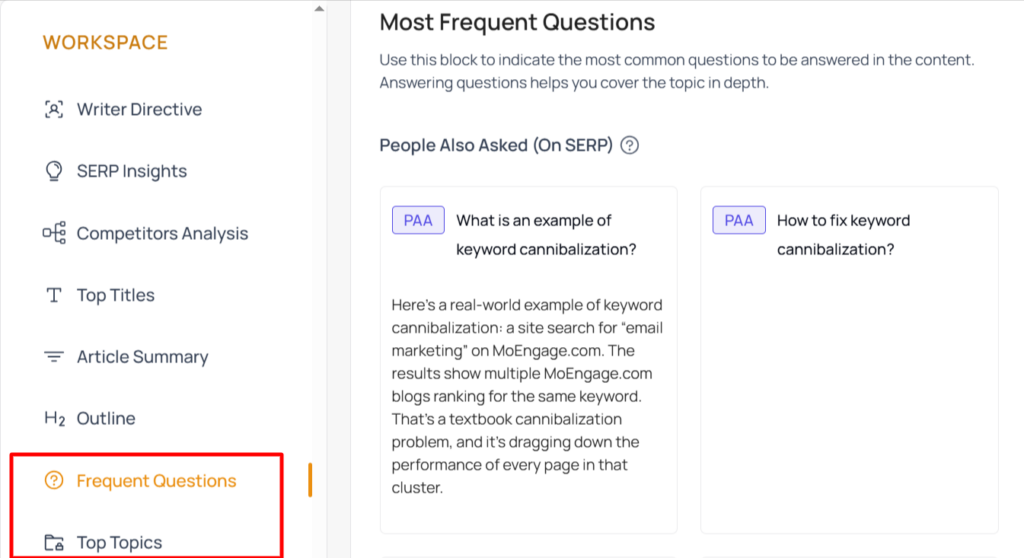
It also generates meta titles and descriptions from competitor analysis, so your writer gets the full optimization layer without you lifting a finger.
thruuu’s SERP analysis tool generates your keyword’s AI Overview summary, key topics discussed, and key data of competitors cited in AI Overviews.
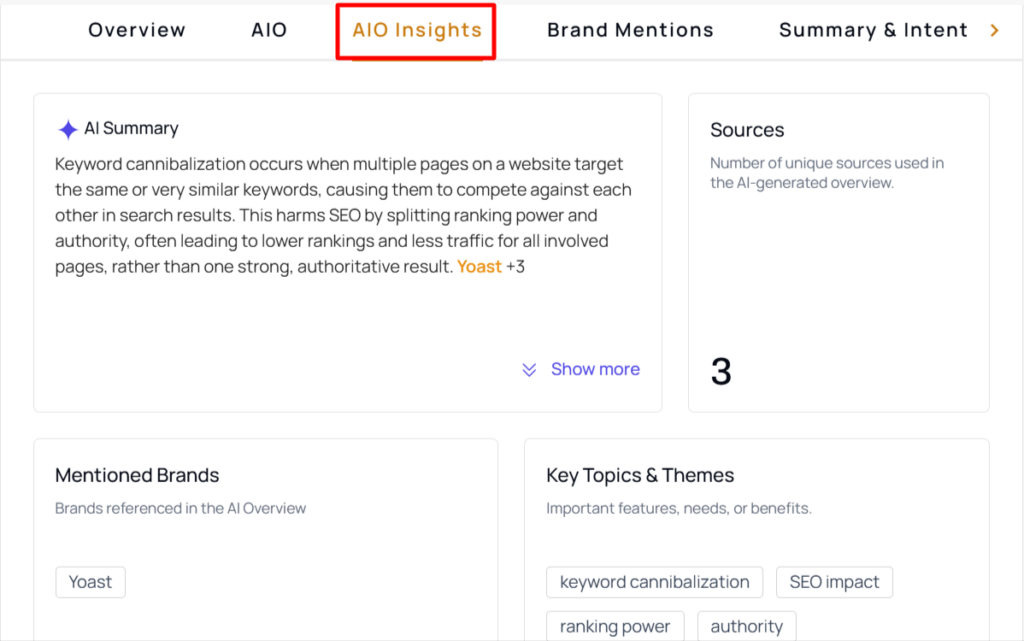
Start a free trial to extract relevant GEO elements to rank on the AI Overview for your keyword.
Further Reading: SEO Vs GEO: Is It Really Different?
Use Brief Templates for Consistency
Consistency in content quality comes from giving every writer, regardless of skill level or familiarity with your brand, the same structured starting point.
A reusable brief template acts as a non-negotiable framework that enforces quality at the input stage, not the revision stage.
thruuu’s content brief generator helps you build and save reusable brief templates with over 15 customizable elements, deployable across every project.
Here’s a step-by-step walkthrough of how the template builder works inside thruuu:
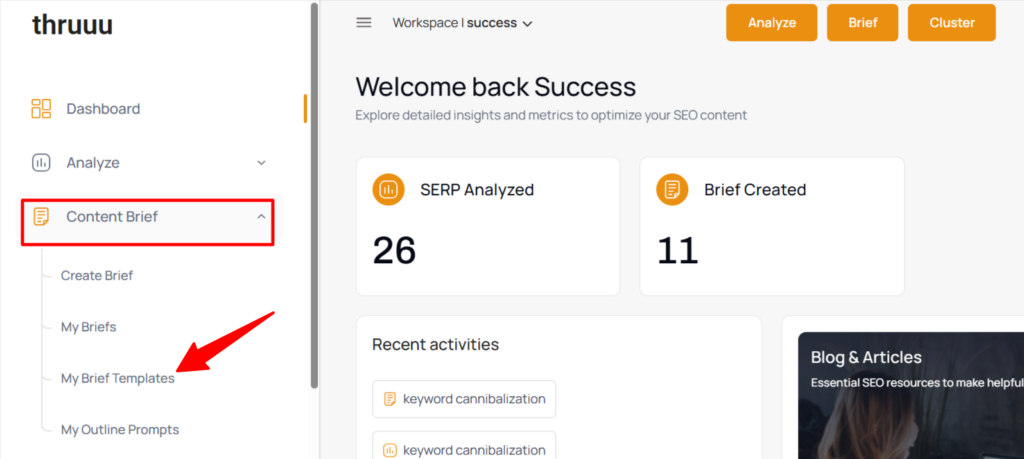
Step 1: Create a new template
Once you’re logged into your thruuu account, click “Content Brief”, then click on “My Brief Template.”
It will lead to another page. Click on “Create a new template.”
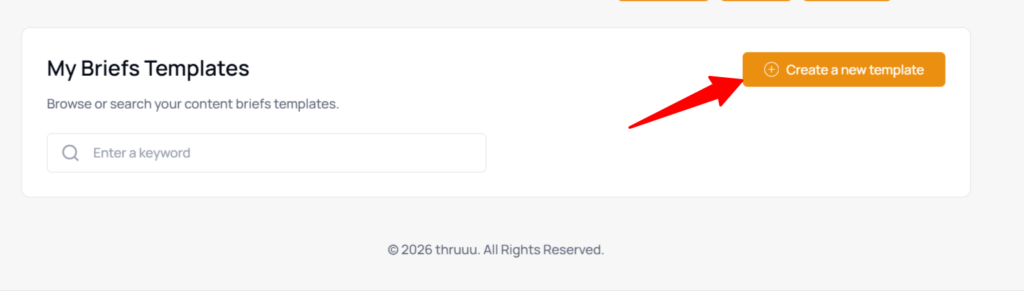
This is your blank canvas; you’ll build your reusable structure from here.
Step 2: Drag and drop your brief elements
thruuu gives you 15+ elements to choose from. You add them to your brief by dragging and dropping them into the main area, then reordering them in a way that suits your workflow.
A collapse view button allows you to tidy everything up so you can manage the layout without visual clutter.
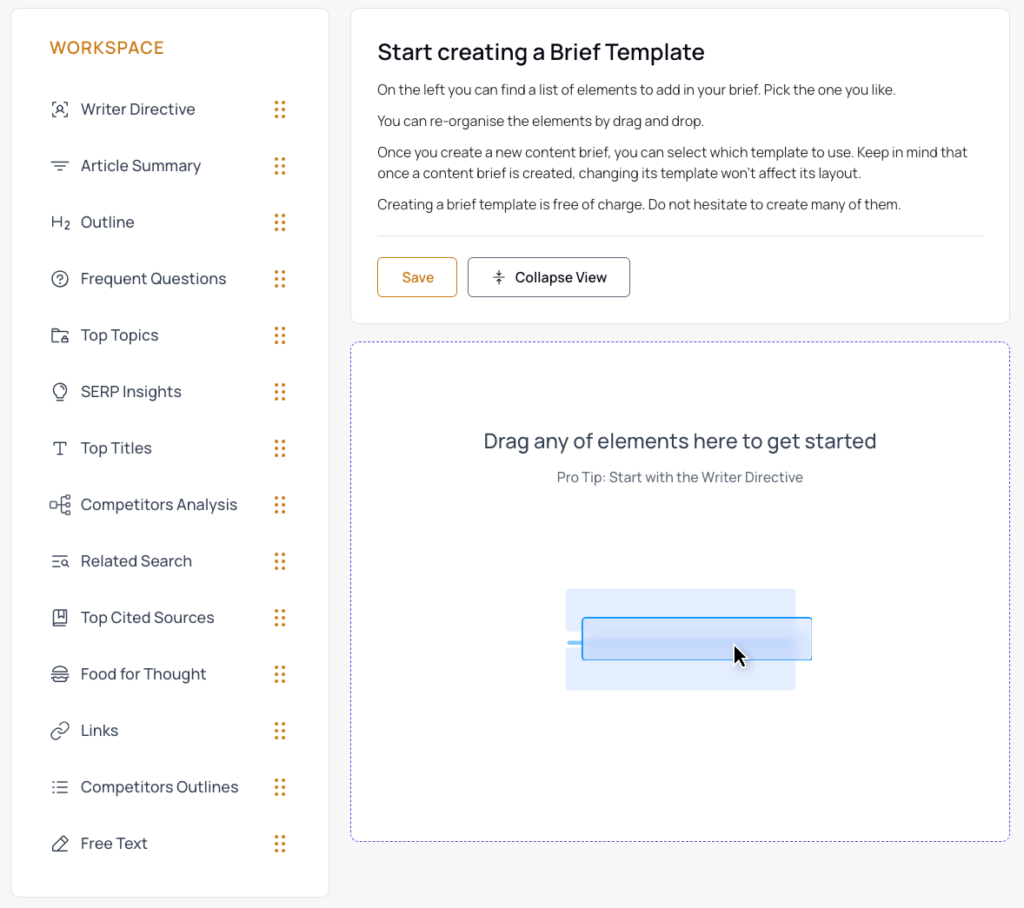
Elements worth including in every template include:
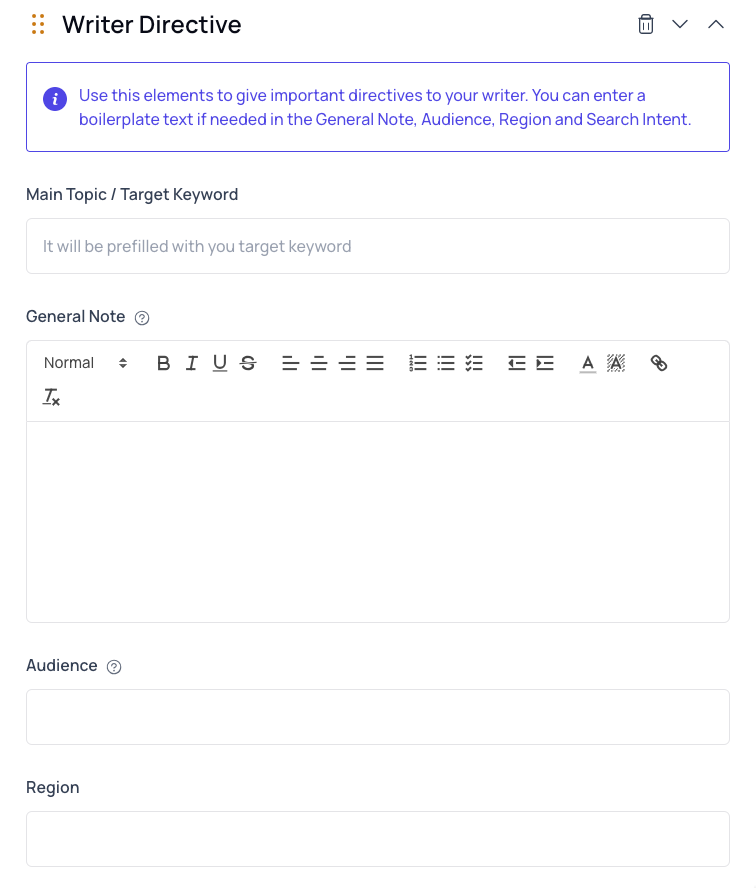
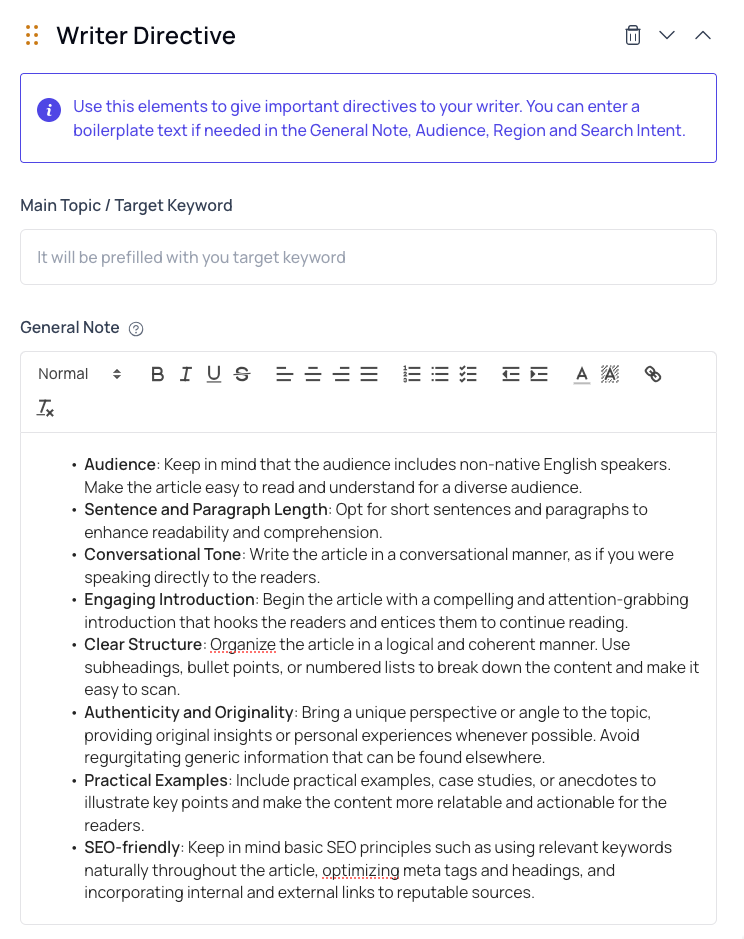
- Writer Directive: Your instructions for tone, audience, funnel stage, and specific content angles. This is where your brand voice lives.
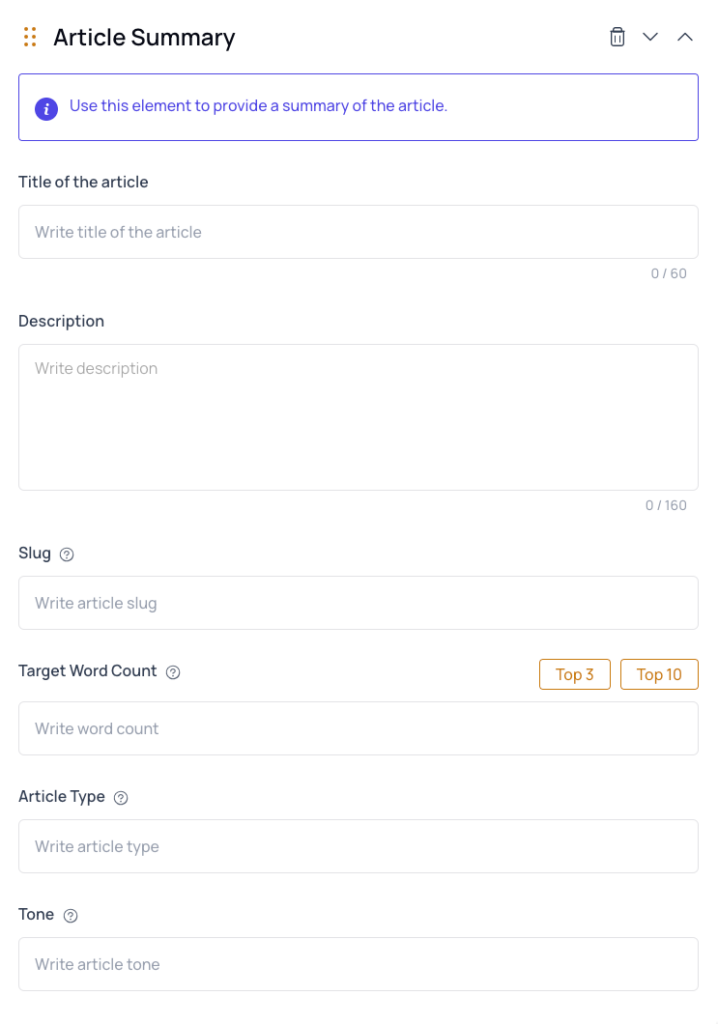
- Article Summary: Covers topic overview, slug, tone, and target word count derived from SERP benchmarks.
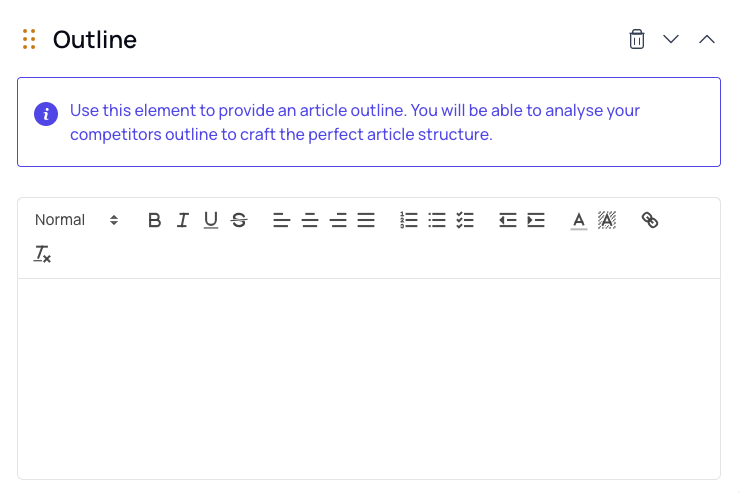
- Content Outline: a structure informed by what the top-ranking pages are doing, not assumptions.
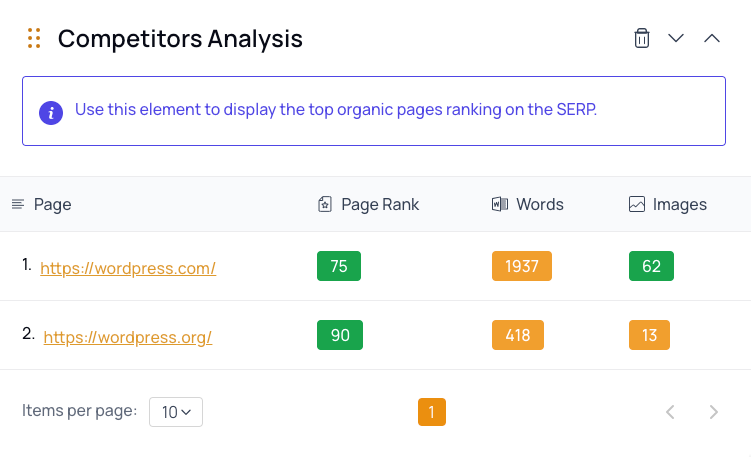
- Competitor Analysis: Gives writers a bird’s-eye view of the top-ranking pages for the exact keyword they’re writing about.
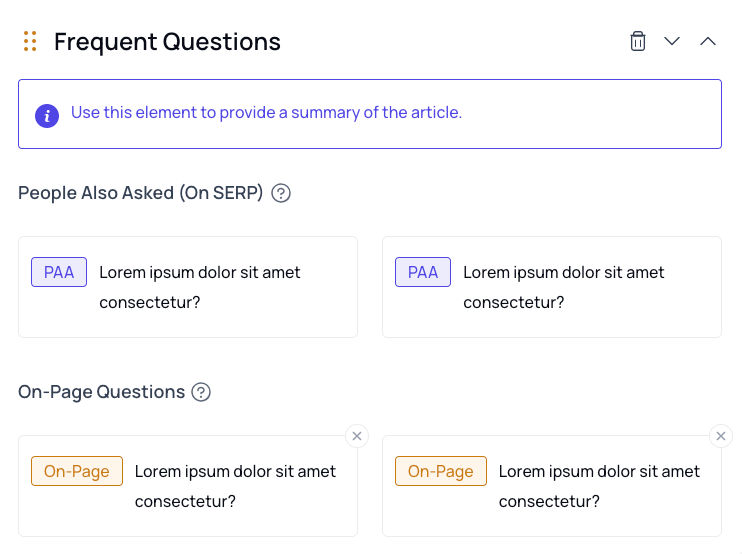
- Frequent Questions: Pulled from People Also Ask and competitor headlines, so writers know exactly what the audience is searching for.
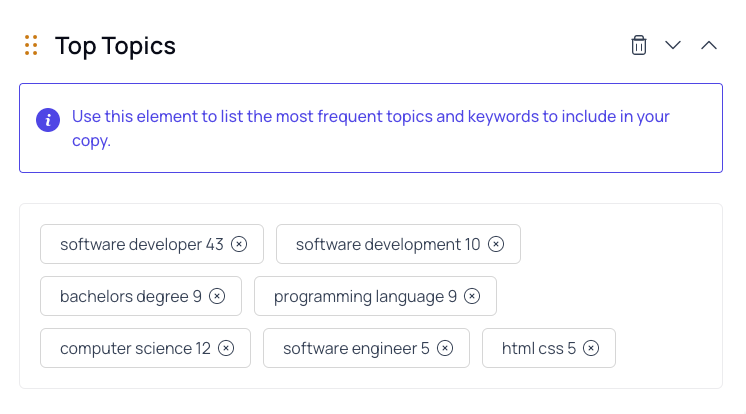
- Top Topics: The topically relevant keywords that top-ranking pages are already using, flagged so writers don’t accidentally omit them.
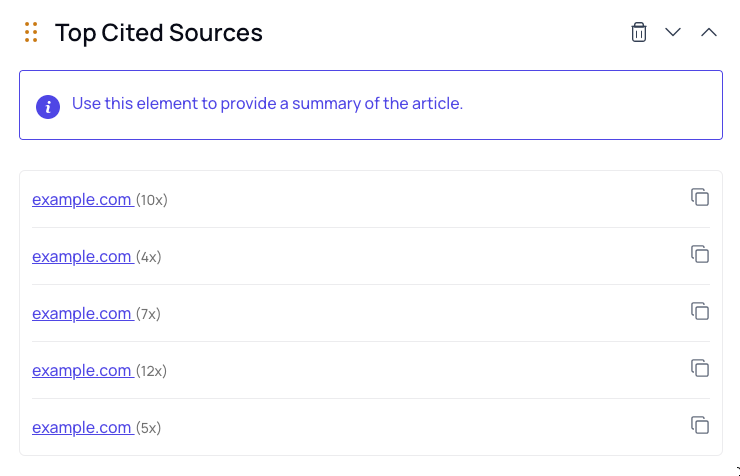
- Cited Sources: Lists the top 5 sources the ranking pages are citing, giving writers authoritative references built into every brief.
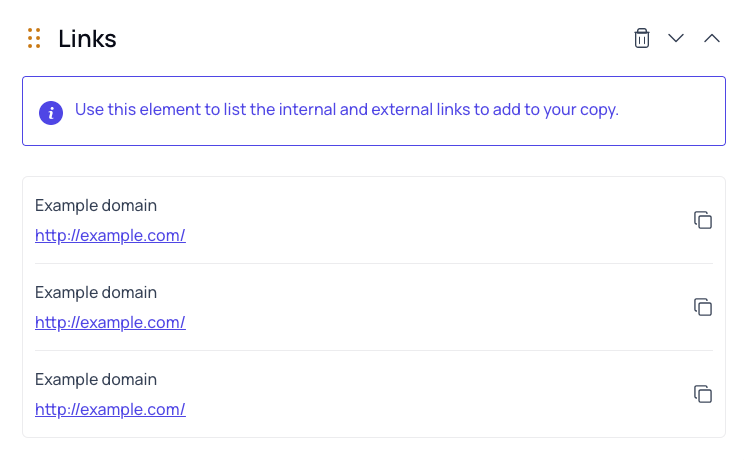
- Links: Specify both internal and external links along with exact anchor text, so writers aren’t guessing about linking strategy.
Step 3: Add boilerplate text to lock in your standards
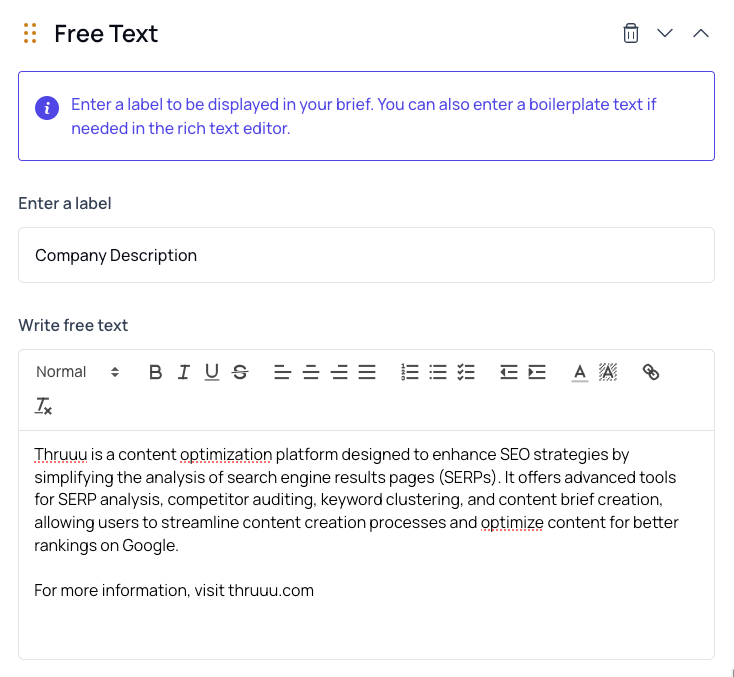
Elements like the Writer Directive and Free Text allow you to enter boilerplate text, default instructions that auto-populate every time the template is used.
Brand voice guidelines, formatting rules, citation expectations, and persona descriptions. Write them once, and they’re in every brief that follows.
The Free Text element is especially versatile. You can add as many as you need to include information about your client, buyer personas, or additional keyword instructions that aren’t covered by standard brief elements.
Step 4: Save and name your template
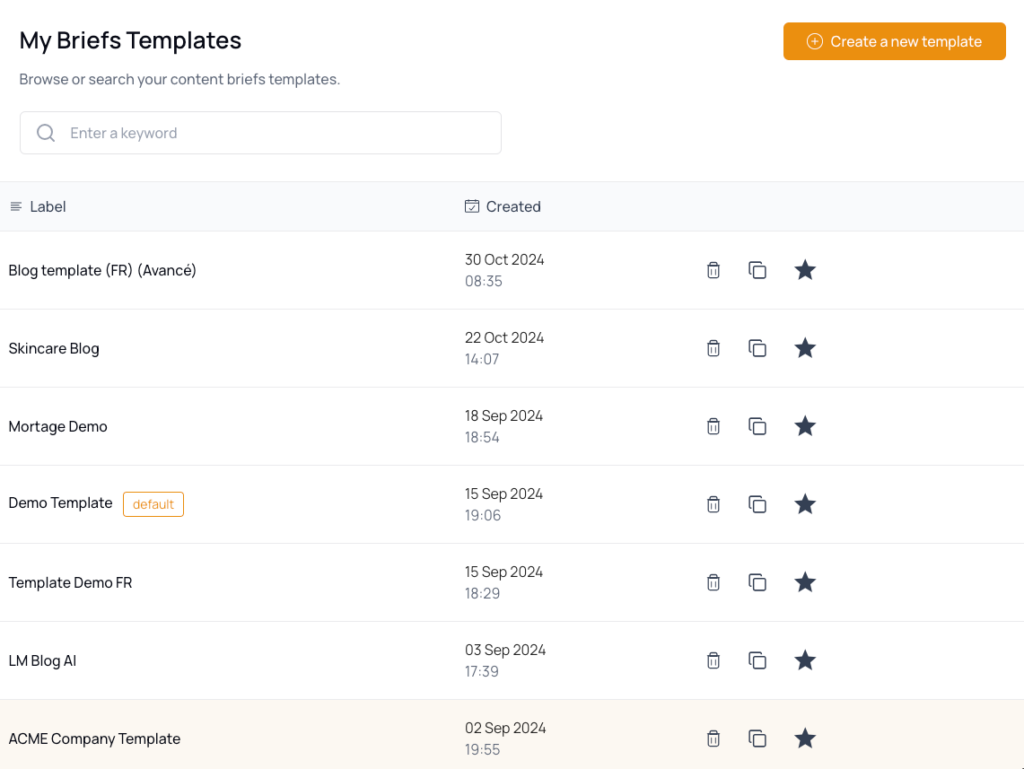
When your template structure is finalized, click “Save” and give it a name that makes it easy to identify across projects.
From the templates dashboard, you can edit, duplicate, delete, or set any template as your default, meaning it auto-loads every time you spin up a new brief.
Step 5: Apply your template when creating a new brief
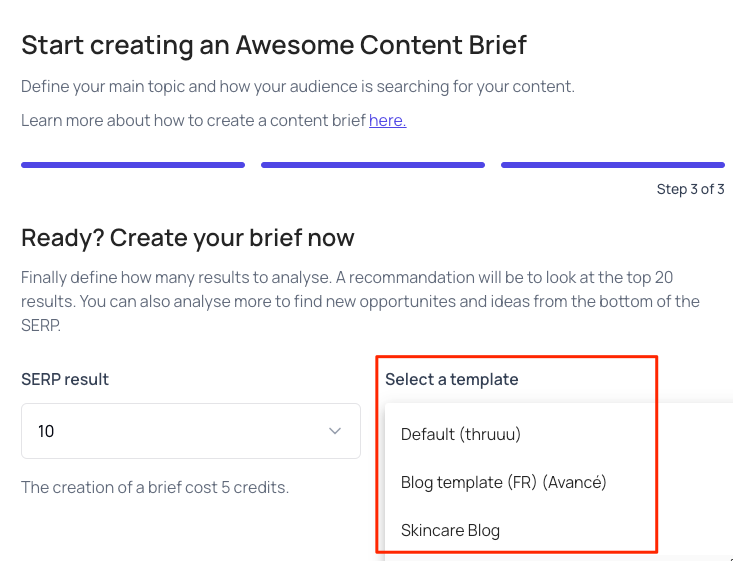
When creating a new content brief, you’ll see a dropdown at the bottom of the creation screen where you select which template to use.
Pick it, and your brief is instantly structured according to the framework you built; SERP data populates into the right sections, and your boilerplate instructions are already in place.
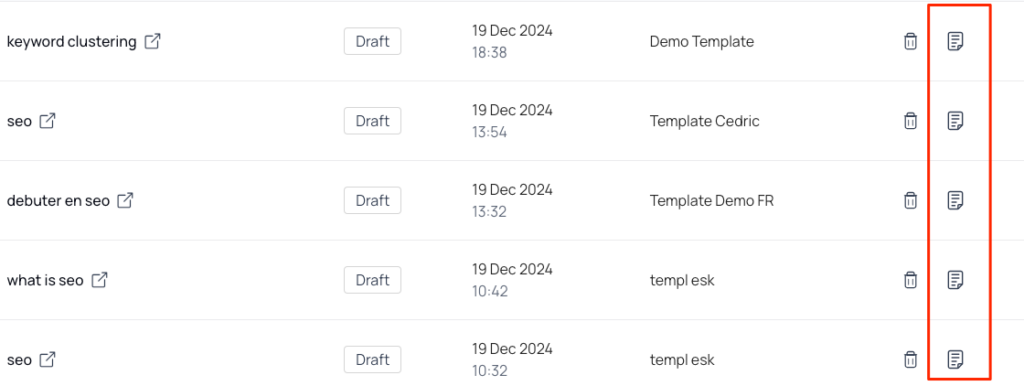
If you apply the wrong template or need to swap it out, you can change it at any time in the briefs listing view.
See how content brief templates work in thruuu.
Best Tools for Creating Content Marketing Briefs
Several tools exist for creating and managing content briefs. Each has a different focus.
| Tool | Brief Depth | AI Search Data | Best For | Starting Price |
| Content Harmony | Top 10 SERP | No | Editorial teams with grading workflows | Custom |
| MarketMuse | Site-wide NLP | No | Enterprise content strategy | $149/mo |
| Frase | Top 20 SERP | Early-stage GEO | Solo creators, fast AI drafting | $45/mo |
| Narrato | Basic SERP | No | Agencies managing freelancer workflows | $36/mo |
| thruuu.com | Top 100 SERP + AI Overviews | Yes — native | SEO teams, agencies, content ops at scale | Free / $13/mo |
thruuu Content Brief Tool
Best for: SEO teams and content managers who brief writers at scale.
thruuu is built for one job: turning SERP and AI Search data into a complete, writer-ready brief.
It pulls heading structures, word counts, People Also Ask questions, and topic gaps directly from top-ranking pages and LLM. You get a competitive content outline before you write a single word.
Where thruuu stands apart is depth plus speed. It covers both SEO and GEO optimization in the same brief. It shows keywords, flags citation-friendly structures, and automatically generates meta titles from competitor analysis.
You also get AI-powered outline generation. Pick your content format, how-to, listicle, or review, and thruuu applies it to real SERP data. Add section-level notes manually for full clarity for the writer.
What Users Say
“Achieving the milestone of creating 100 SEO-optimized content briefs in just 10 hours with thruuu was a game-changer for us.” Maximilien Labadie, CEO of Web and SEO Agency
“thruuu transformed our ability to deliver GEO and SEO services at scale. What used to take our team days of manual analysis now takes hours, and the AI-optimization insights we’re getting are directly translating into featured snippets and AI citations for our clients. It’s one of our secret weapons in the recipe for winning in AI search.” John McKusick, CEO of NextLeft, an agency specializing in GEO and AI SEO
See examples of briefs created with thruuu at thruuu.com/blog/content-brief-examples/.
Content Harmony
Best for: Teams that want intent-scoring and content grading alongside brief creation.
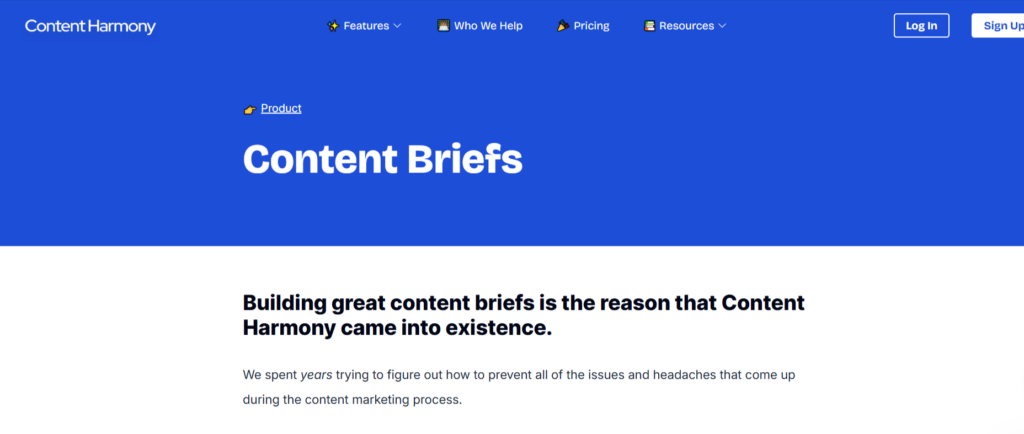
Content Harmony focuses on search intent matching. It grades your brief and your final content against what ranking pages actually cover, so you know before publishing whether your content fits the query.
The interface is clean. The intent scoring is genuinely useful for teams that want a quality check built into their workflow.
Content Harmony is strong on intent analysis but light on automated competitive research. You still do a lot of manual work to flesh out the brief with substance.
Frase
Best for: Solo content creators who want research and writing in one place.
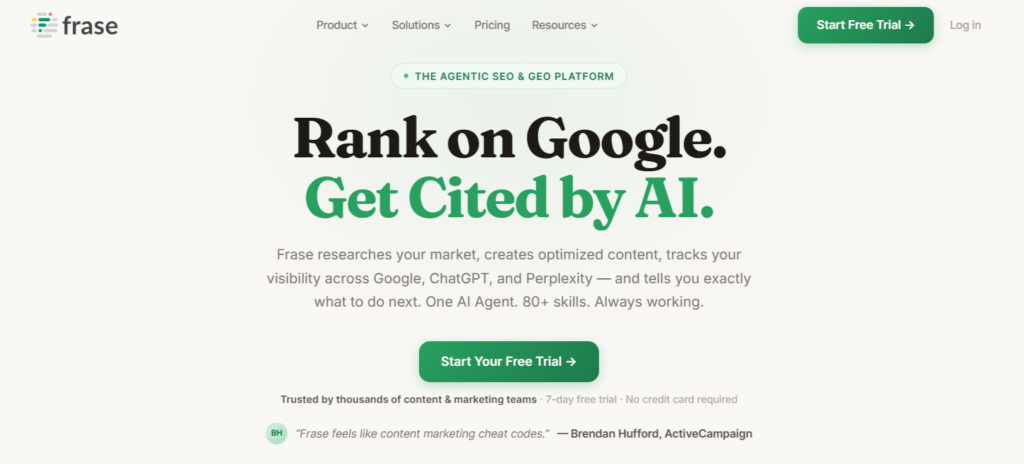
Frase combines brief creation with AI writing assistance. It pulls questions and topics from search results, then lets you draft content inside the same platform.
The all-in-one appeal is obvious. Research, brief, and draft without switching tabs.
Where Frase struggles is the brief depth. The competitive research is surface-level compared to dedicated brief tools. You get enough to start writing, but not enough to give a writer full strategic direction. Teams briefing multiple writers will hit its limits fast.
MarketMuse
Best for: Enterprise content teams managing large sites with complex topic clusters.
MarketMuse uses AI to map topic authority across your entire site. It identifies content gaps, scores your pages against competitors, and recommends which topics to prioritize based on your existing authority.
It’s as much a strategic planning tool as a brief tool.
The drawback is the price point and the learning curve. MarketMuse is expensive and takes time to set up properly. For teams that just need a fast, solid brief, it’s overkill. You pay for strategic depth you may not fully use.
Narrato
Best for: Agencies managing multiple clients and writers across multiple projects.

Narrato is a content workflow platform with built-in brief creation. It combines AI content briefs, team collaboration, and project management in one place. Writers, editors, and managers work inside the same dashboard.
Narrato does many things, but brief creation is not its sharpest feature. The SERP research is basic. If your priority is a data-rich brief that gives writers deep competitive context, Narrato falls short. It works better as a workflow tool than a research tool.
Key Takeaways
A content marketing brief is the foundation of reliable content production. It prevents miscommunication, reduces revision cycles, and ensures every piece is grounded in research before writing starts.
The most effective briefs include:
- Clear project goals and success criteria
- Specific audience insights beyond job title
- A structured content outline with section-level writer notes
- SEO and GEO optimization guidance built from SERP data
- A distribution plan that informs the writing itself
If you’re building briefs manually or from a basic template, you’re leaving research on the table. thruuu builds the research layer automatically from live SERP data, and each brief costs less than $1.
Download a free content brief library to get started with ready-made templates, or go straight to thruuu’s content brief generator to create your first data-driven brief.
Empower Your Content Team
Our end-to-end content optimization solution empowers your team to crack the Google algorithm, craft exceptional content, and achieve remarkable organic search results.